
Last updated November 23, 2026
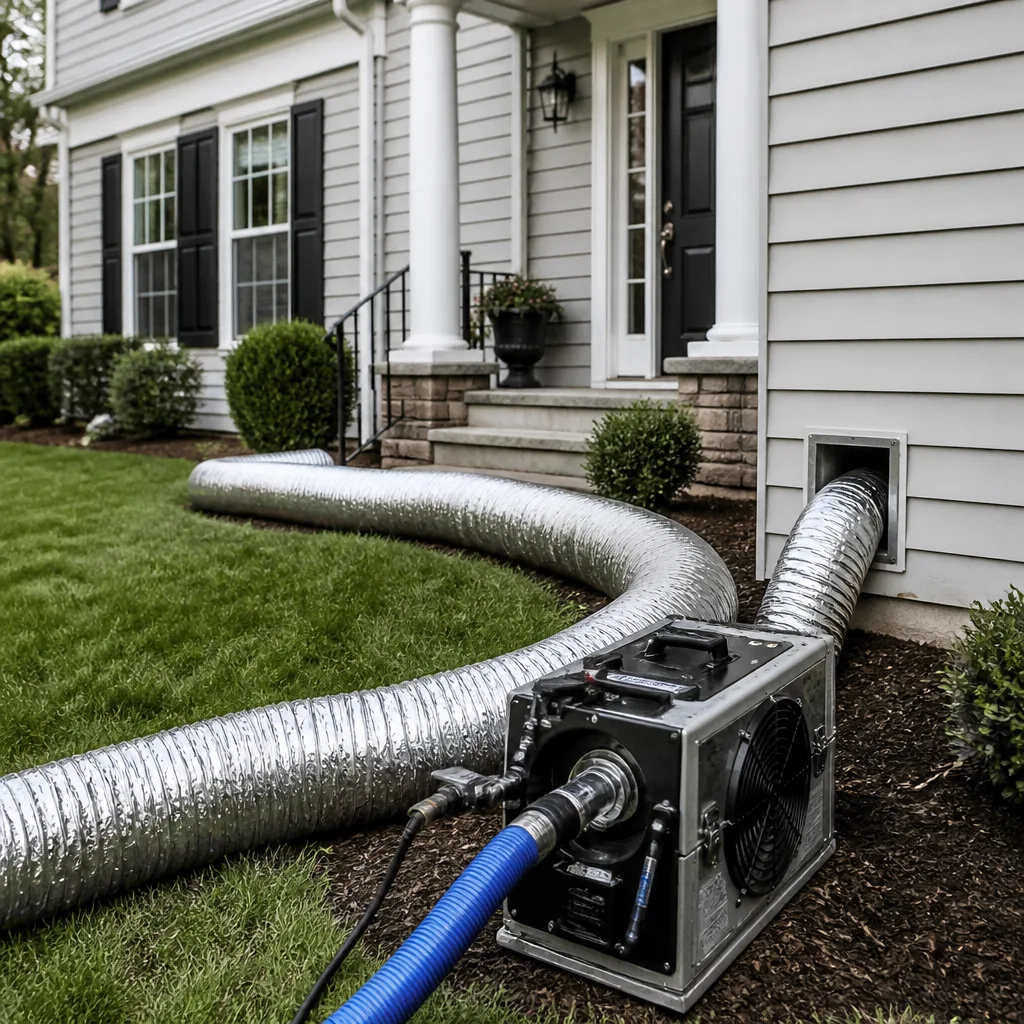 Whole-home duct cleaning
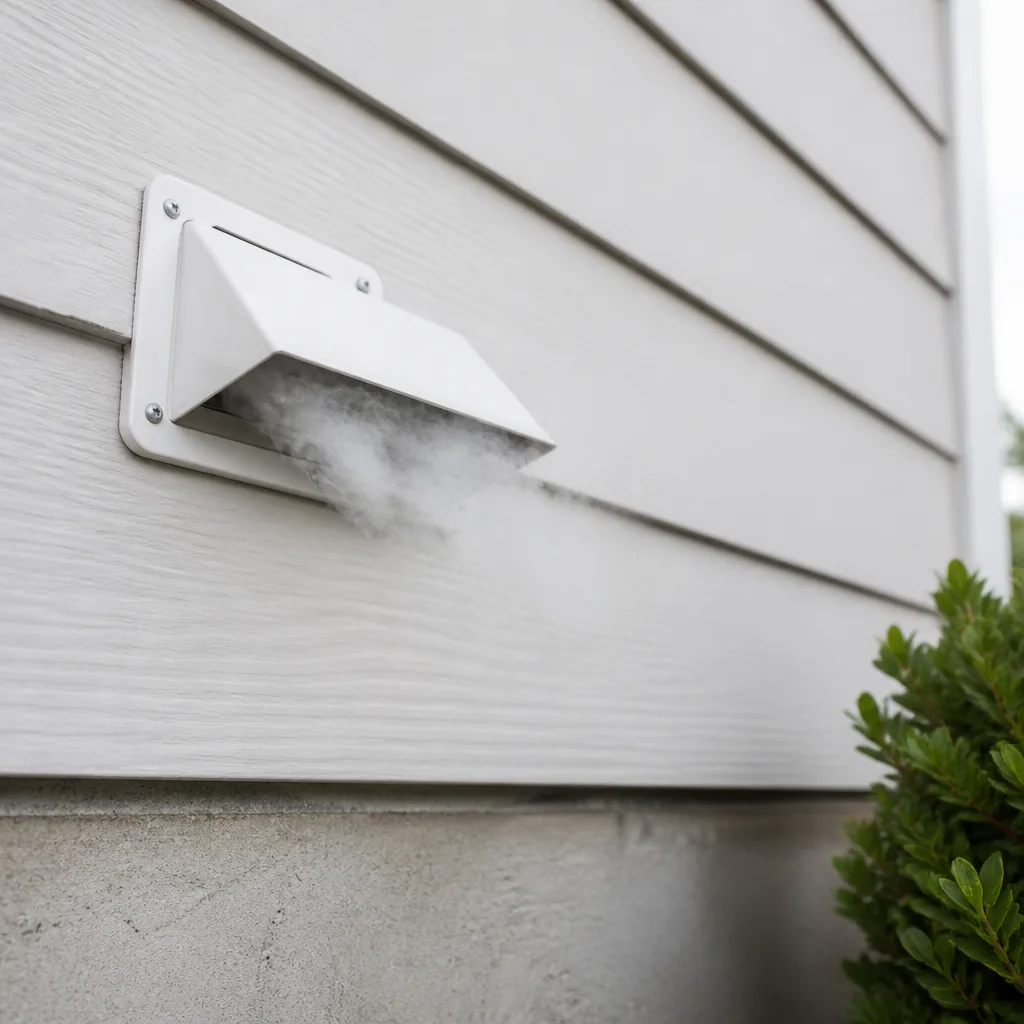 Dryer vent cleaning
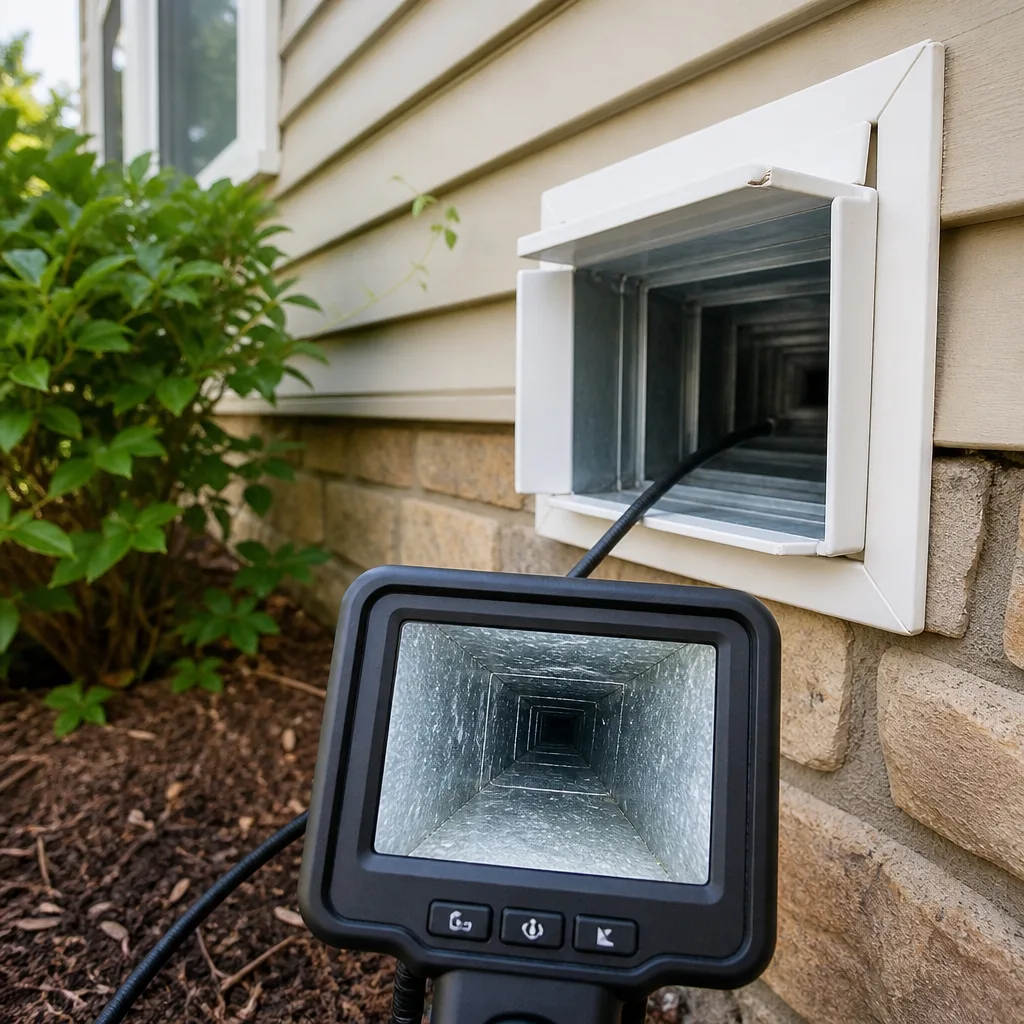 Camera inspection
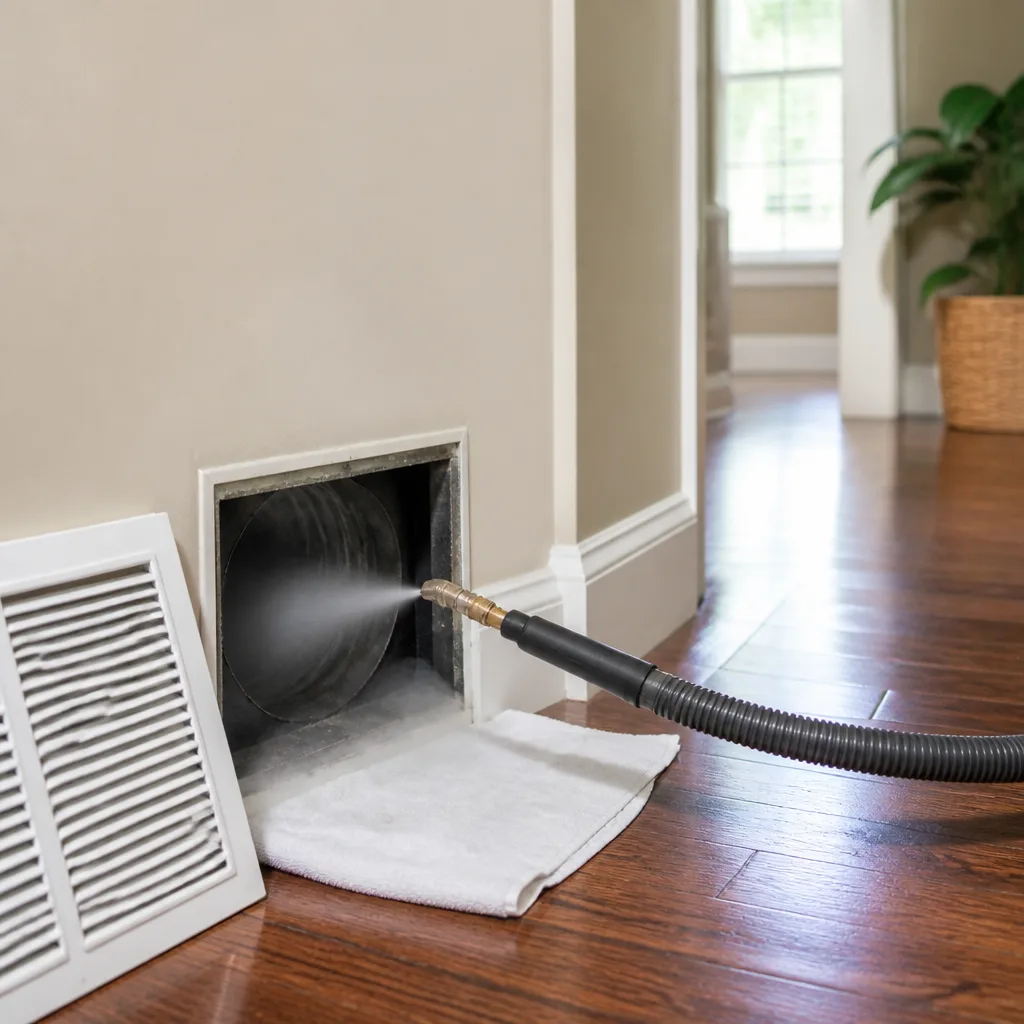 Sanitizing & deodorizing
Whole-system duct and dryer vent check with before-and-after photos - you see exactly what came out of your vents
That "$99 whole-house special" is a bait ad - the real number appears once they are in your hallway, or the "clean" is a shop-vac at the register. We photograph the inside of your ducts before and after instead.
How to Hire an Air Duct Cleaning Contractor in East Nashville: A Step-by-Step Guide
Tennessee does not require a specific license to clean air ducts. That one fact explains most of what goes wrong in this trade. The contractor who arrives in an unmarked van offering a same-day price and the crew running a Nikro negative-air system are, from the state’s point of view, operating in the same regulatory space. Nothing separates them on paper. The difference is entirely on you to identify before anyone touches your system.
This guide gives you the technical criteria to do that screening. You’ll learn what a contractor’s answer about their vacuum equipment actually tells you, why NADCA membership means more than a logo, which low-bid scam patterns show up around Nashville, what a real walk-through looks like, and what has to be in writing before work starts. East Nashville homeowners deal with the same old housing stock and humid summers as the rest of Davidson County, and a contractor who knows this market will talk about your specific system, not a generic script.
Quick Answer
To hire an air duct cleaning contractor in East Nashville, verify four things before booking: the specific vacuum and agitation equipment they use (a real HEPA-rated negative-air unit, not a shop vacuum), their NADCA membership or equivalent training, a written scope of work with a flat price per system agreed in advance, and a walk-through assessment of your ductwork before any quote is given. Skip any one of these and you’re gambling on who shows up.
Styles & brands we work with
- Whole-home duct cleaning
- Dryer vent cleaning
- Camera inspection
- Sanitizing & deodorizing
Table of Contents
- Why Tennessee’s Lack of Licensing Changes How You Hire
- The Equipment Questions to Ask Before You Book
- What NADCA Membership Actually Requires
- Low-Bid Red Flags in the Nashville Market
- What a Legitimate Walk-Through Looks Like
- The Written Scope Checklist
- How to Verify the Work Was Done
- Common Mistakes to Avoid
Why Tennessee’s Lack of Licensing Changes How You Hire
Most trades you hire around the house carry a state license. Electricians, plumbers, HVAC mechanical contractors: all of them answer to a licensing board with continuing education requirements and a complaint process. Air duct cleaning, in Tennessee, does not. There is no dedicated duct-cleaning license class, which means the barrier to entry is a phone number and a vehicle.
That’s not a knock on the trade. Plenty of skilled, careful operators work without a specific license because the state never created one. But it does mean you can’t lean on the credential check you’d use for a plumber. You have to build the vetting yourself, from questions that reveal capability.
The good news: legitimate contractors welcome those questions. In our experience, the operators who invest in professional-grade equipment and membership in industry bodies are eager to explain why. The ones who get defensive about “what kind of vacuum do you run” are telling you something.
A few local realities shape this. East Nashville has a lot of pre-war and mid-century housing stock where ductwork is often original, undersized, or retrofitted through spaces a newer build wouldn’t use. Add Nashville’s humid summers and the way that moisture interacts with cool duct surfaces, and the difference between a thorough mechanical clean and a surface pass becomes visible fast. A contractor who understands this won’t quote a system without seeing it.
The practical takeaway: treat the hiring process as your licensing substitute. You’re screening for equipment, training, transparency, and a written scope. Do that consistently and you filter out most of the field before it reaches your door.
The Equipment Questions to Ask Before You Book
The single most revealing question you can ask an air duct cleaning contractor is this: “What vacuum system will you bring into my house, and what’s its rated airflow?” It sounds technical. That’s the point. Anyone doing this work competently knows the answer.
Here’s what a strong answer sounds like, and what it tells you.
What a legitimate vacuum answer includes
- A named, purpose-built system. Nikro or Rotobrush equipment, or an equivalent professional-grade HEPA-rated vacuum. These units are engineered to hold negative pressure on the duct system, contained, while debris is extracted.
- A HEPA rating they can explain. HEPA filtration traps fine particulate rather than blowing it back into the room. A contractor should be able to tell you their filter class without hesitation.
- Agitation equipment. Vacuum alone doesn’t dislodge caked-on debris from duct walls. Rotary brush systems like Rotobrush mechanically agitate the duct interior while the vacuum pulls. Ask what they use to agitate.
- Containment during the job. Equipment like Abatement Technologies negative-air and filtration devices keeps contaminants out of your living space while work is in progress. A contractor who brings containment is protecting your home, not just cleaning a duct.
What a weak answer tells you
If the answer is “a shop vac” or “a really powerful vacuum,” you’ve learned the essential fact. A modified shop vacuum cannot hold negative pressure on a duct system, cannot trap fine particulate at HEPA level, and cannot agitate duct walls. It removes what’s loose and blows the rest around. In older East Nashville homes with decades of settled debris, that’s the difference between a clean system and a dust event.
Ask the question before you book and listen for a specific equipment name. A real Air Duct Cleaning East Nashville approach starts with the equipment, because the equipment determines what’s possible.
What NADCA Membership Actually Requires
NADCA, the National Air Duct Cleaners Association, is the body that publishes industry standards for how duct cleaning should be done. Membership is not a licensing requirement in Tennessee, but it’s a meaningful signal because of what a member commits to.
Ask specifically whether the contractor is a NADCA member and whether their technicians hold NADCA certifications. Then listen for what they do with that training on a real job. Members work from a documented standard that covers source removal (physically taking debris out, not sealing it in), containment to keep the home clean, proper negative pressure during cleaning, and post-cleaning verification. A contractor who describes their process in those terms is working from a real standard, not a pitch.
Non-members can still be excellent. Membership is one signal among several, not a golden ticket. But in a state with no licensing, a contractor who has voluntarily joined a standards body and put their technicians through its certification program has demonstrated something you can’t get from a logo alone. It’s a commitment to a process that a low-bid operator has no incentive to adopt.
Pair this with the equipment check. NADCA-trained crews use equipment that matches the standard: mechanical agitation, HEPA extraction, containment. The two signals reinforce each other. If a contractor claims membership but describes a shop-vac process, trust the process description.
Low-Bid Red Flags in the Nashville Market
Cheap duct cleaning is a familiar pattern around Nashville. It usually starts with an advertised low price and ends with a crew finding something alarming in your ducts that wasn’t mentioned in the ad. The most common version: a technician opens a vent, shines a light, and declares mold. Suddenly a $79 appointment has an upsell attached.
Here are the red flags to watch for before you book, and what each one means.
- A price given before anyone looks. If a contractor quotes your whole system over the phone without seeing the ductwork, the price is a marketing number, not an estimate. Real pricing depends on the system.
- A per-vent price. Legitimate duct cleaning is priced per system, not per vent. Per-vent pricing punishes larger homes and rewards the operator for counting vents.
- The “mold found” upsell. Anyone diagnosing microbial growth from a flashlight glance is selling, not assessing. Mold assessment is a separate discipline with its own standards.
- A coupon price that evaporates. The advertised number is bait. Once the technician is on site, the actual bill is several times higher.
- No written scope. If you can’t get a document that says exactly what will be cleaned and for how much, you have no protection.
- No containment equipment. A crew that doesn’t protect your living space during the job is telling you what they think of the mess they’re about to make.
- Pressure to decide immediately. A contractor confident in their process doesn’t need to close you on the spot.
The honest version looks different. A real contractor walks your system, explains what they see, writes a scope, sets one flat price per system, and stands behind it. Ask any contractor you’re screening how they handle the “we found something extra” conversation. The answer separates the field quickly.
What a Legitimate Walk-Through Looks Like
Any quote worth trusting comes after a walk-through, not before. A legitimate walk-through takes a contractor through your system and gives you information, not just a number. Here’s what a real one includes.
- They look at your air handler and furnace. The equipment, its age, and its condition all affect how the ducts should be cleaned and what the cleaning will reveal.
- They trace the duct runs. Supply and return, main trunks, branch runs, and where the system bends or narrows. Old East Nashville homes often have ductwork that’s been added to or modified, and a contractor who looks will find it.
- They check accessible registers and grilles. Debris accumulation at the register often hints at what’s upstream.
- They inspect the return side closely. Return ducts carry the most debris. A contractor who ignores the return side is cleaning half the system.
- They note the dryer vent if relevant. A thorough walk-through includes the dryer vent, which is a separate fire-risk concern.
- They write a scope and quote on the spot. Not a callback with a number weeks later. One flat price per system, in a document you keep.
Ask to see before-and-after photos of their own work on a comparable system. A contractor who documents the job they do will have those photos, and they’ll show you what a real clean looks like. That’s the standard we hold: what’s inside your ducts, and what we remove, made visible.
The Written Scope Checklist
Before any crew touches your system, get these items in writing. If a contractor resists putting them down, that’s your answer.
- The specific equipment to be used. Name the vacuum system, the agitation tool, and any containment devices. Nikro, Rotobrush, Abatement Technologies, or their professional equivalents.
- The scope of the clean. Which duct runs, supply and return, registers, grilles, and the air handler. Vague language like “whole house” without a rundown of what that means should raise a question.
- One flat price per system. Not per vent, not per hour, not a range that can expand once work starts.
- Any optional add-ons spelled out separately. Sanitizing, sealing, repair, and dryer vent cleaning should each carry their own documented price, decided before the crew arrives.
- What happens if they find damage. Duct repair and sealing should be scoped and priced separately from cleaning, with your approval before it’s done.
- The payment terms and how the final price is settled. The written estimate sets the final price.
- Before-and-after documentation. Photos of your own ducts before and after the job.
The scope document is your leverage. A contractor who works from a written scope is accountable to it. A contractor who works from memory isn’t.
When the job calls for more than surface cleaning, the scope should reach into air duct cleaning and, where relevant, air quality and sanitizing work. That’s where the process goes beyond removing debris.
How to Verify the Work Was Done
Verification is where the low-bid operation and the professional separate permanently. You can’t see inside your ducts, so the contractor has to show you. Here’s what to ask for.
- Before-and-after photos of your own system. Not stock photos, not photos of a different house. Your ductwork, your registers, documented.
- A walk-through of the work when it’s complete. The contractor should take you through what they found, what they removed, and any issues they spotted.
- A written summary of findings. Anything the crew noted during the job, including damage or conditions worth addressing.
- Confirmation of containment removal. Containment is only useful if it comes out with everything it captured.
Ask to see the equipment in operation if you’re unsure. A crew running a Nikro vacuum and a Rotobrush system has nothing to hide; the equipment is right there and doing the work while you watch.
If your ducts showed signs of wear, damage, or separation, that’s a repair conversation, not just a cleaning one. Duct repair and sealing address the root cause of energy loss and re-contamination. Cleaning a duct that leaks is a temporary fix.
Common Mistakes to Avoid
- Booking the cheapest quote without asking about equipment. A low price reflects what the crew brings. Ask the vacuum question first, then compare prices.
- Accepting a price quoted before anyone looks. A phone quote is a marketing number. A walk-through quote is an estimate.
- Falling for the mold upsell. Anyone diagnosing microbial growth from a flashlight in your register is selling. Ask for a proper assessment, not a while-we’re-here pitch.
- Skipping the written scope. Without a document, you have no way to hold a contractor to what they promised. One flat price per system, in writing.
- Ignoring the dryer vent. A clogged dryer vent is a leading cause of residential house fires. If a contractor is already in your system, that vent should be on the list.
- Letting a contractor clean without checking the air handler. The ducts and the HVAC equipment work together. Cleaning one without assessing the other leaves the system half-addressed.
- Not asking about containment. A crew that doesn’t protect your living space during the job may be pushing debris back into it. Ask what they bring to contain dust.
See the difference
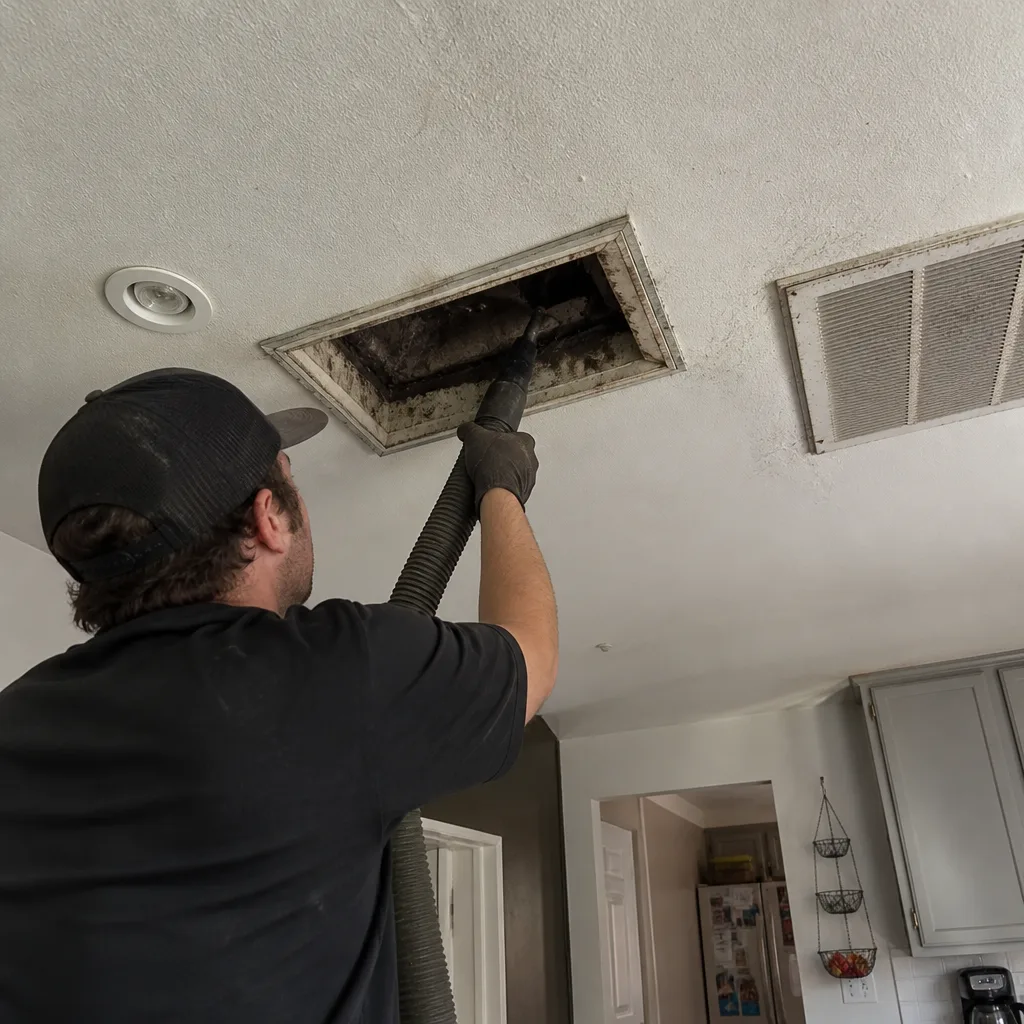 Before
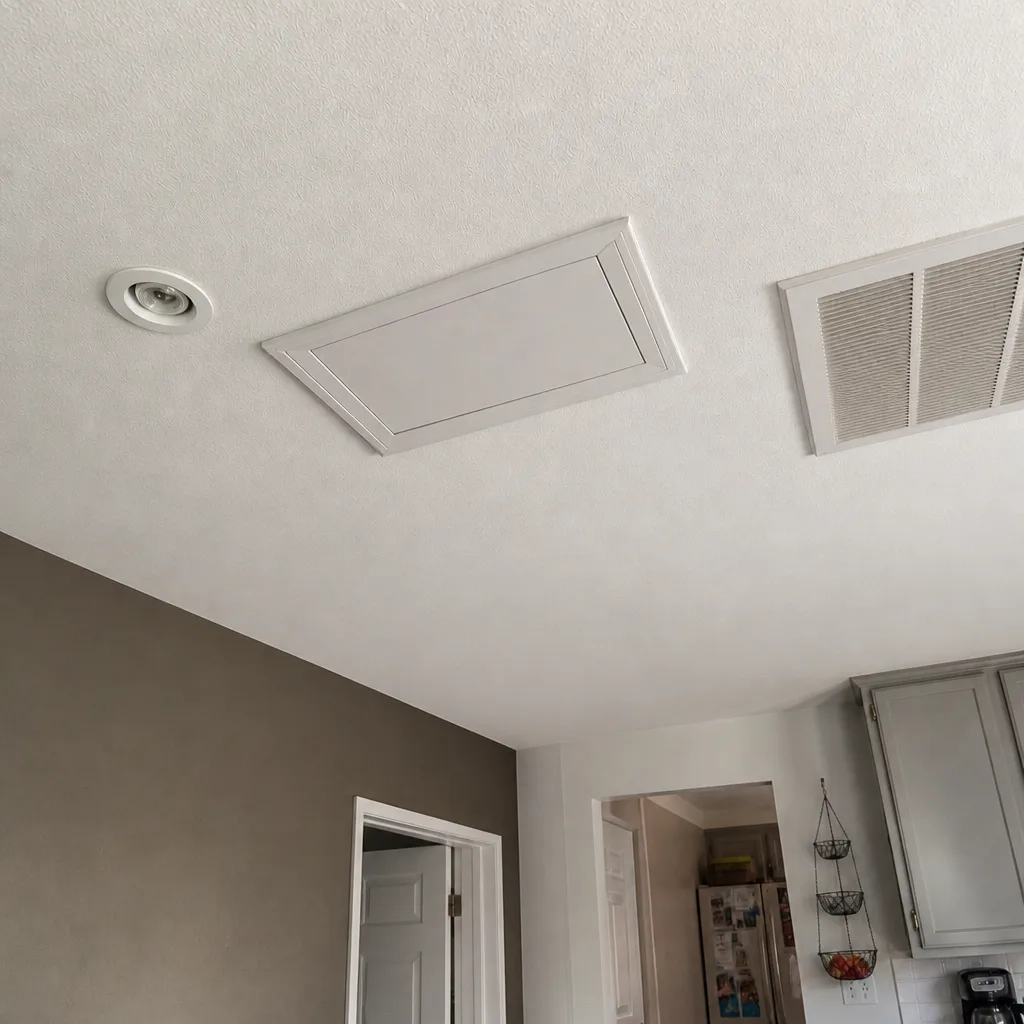 After
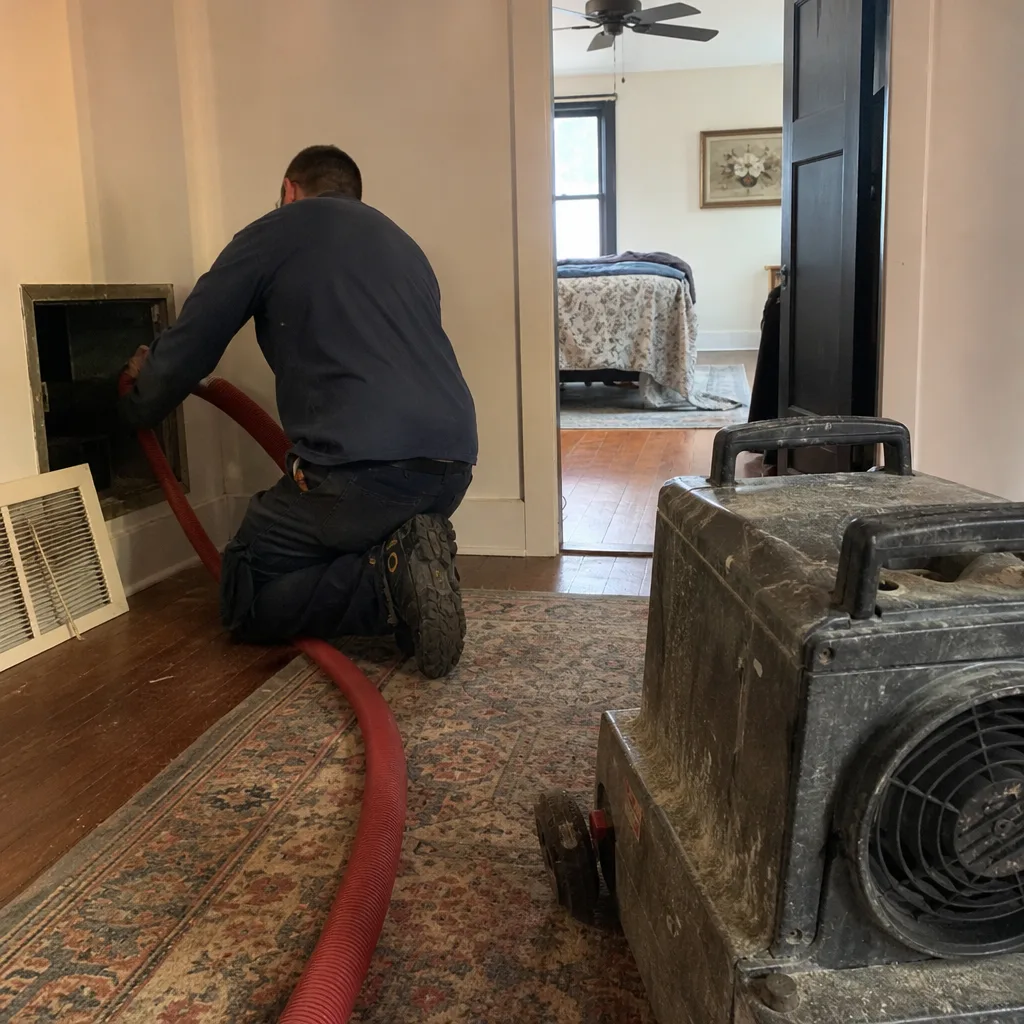 Before
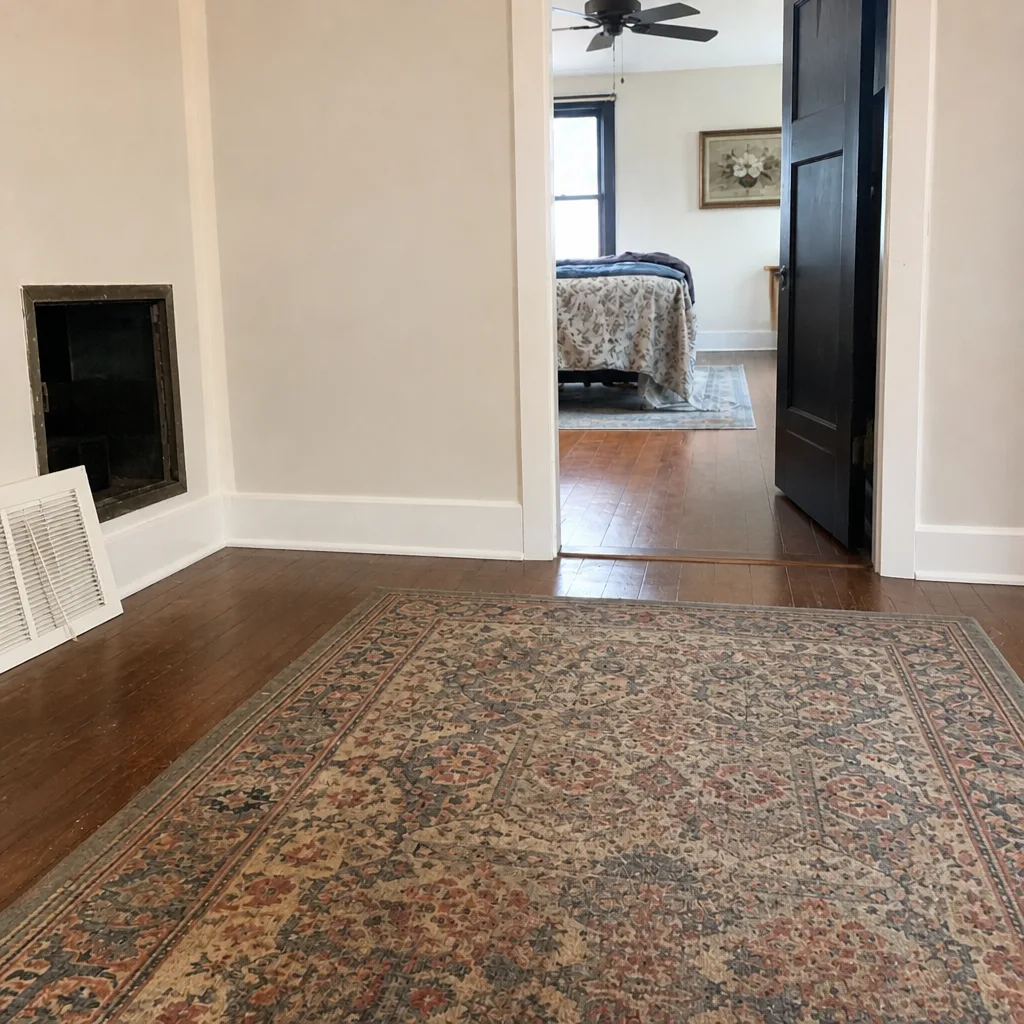 After
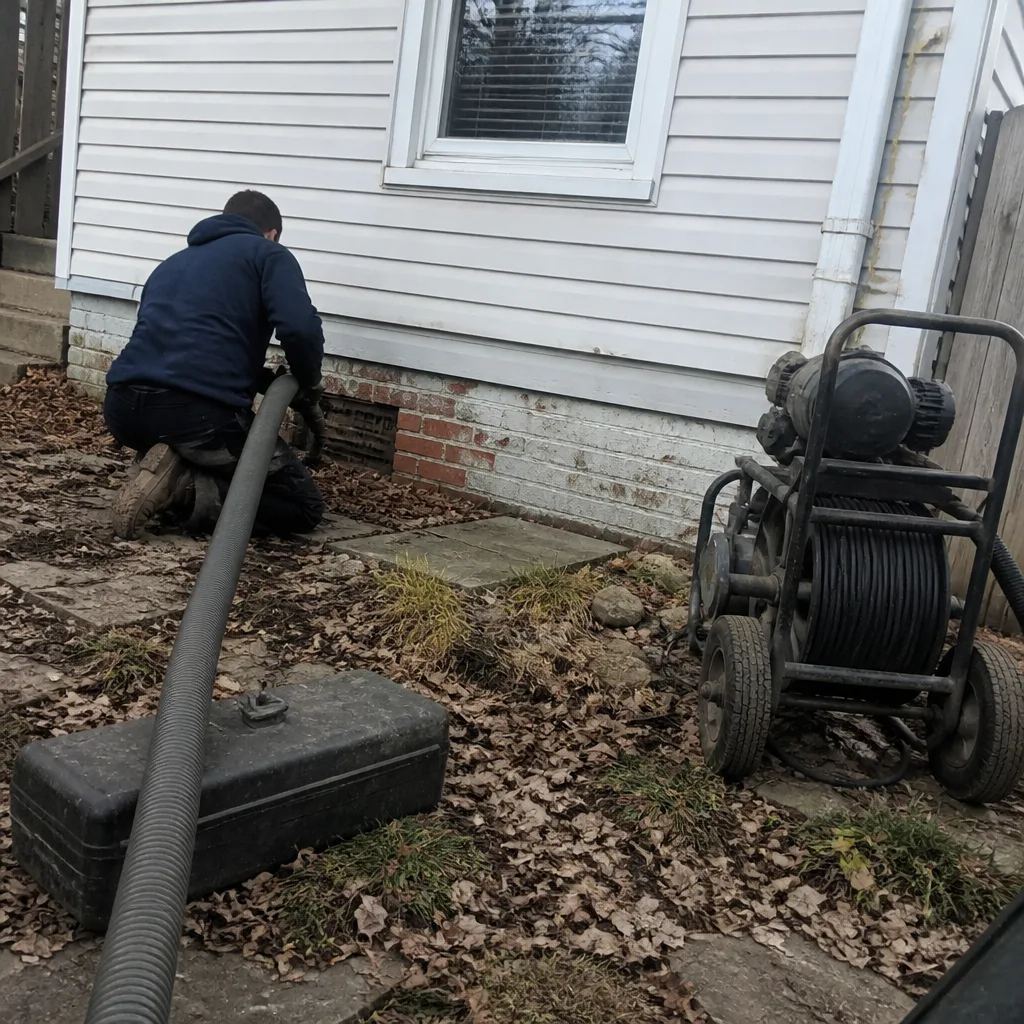 Before
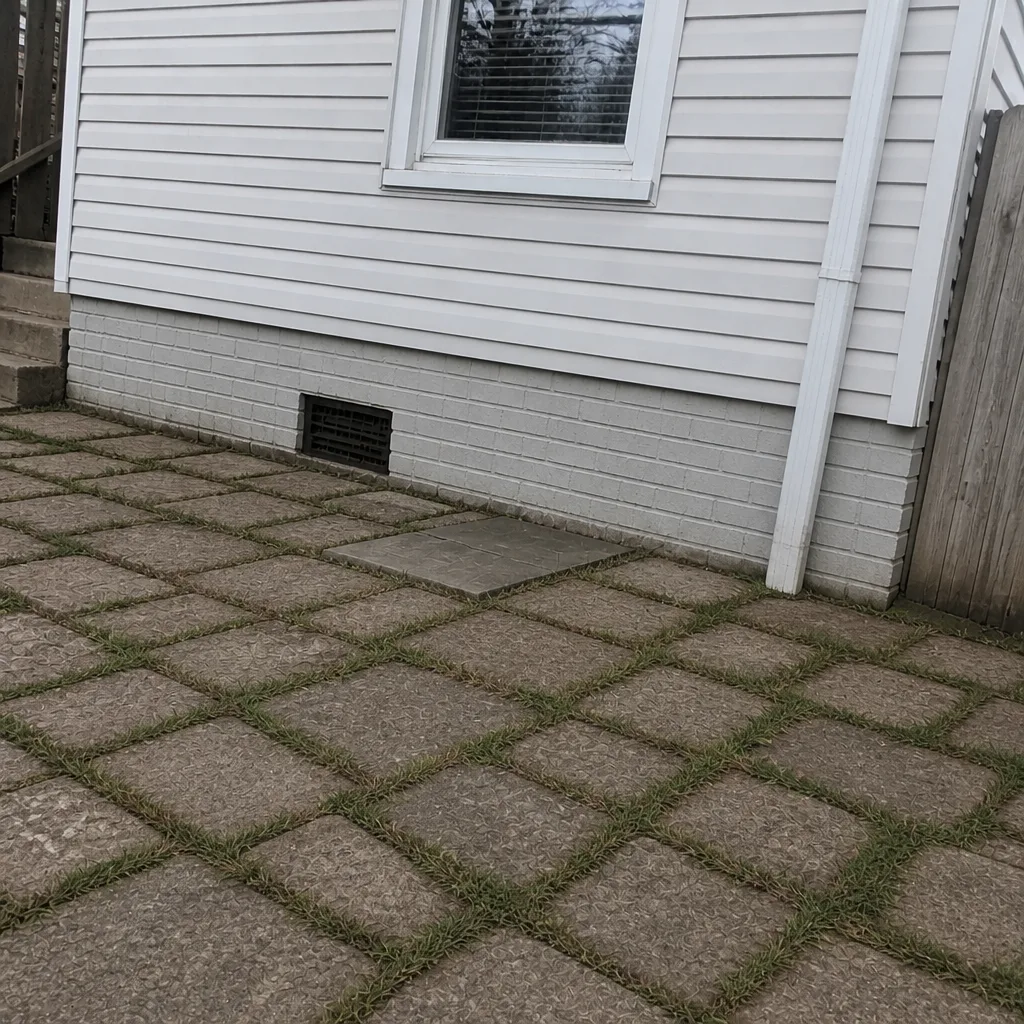 After
When to Call a Professional
Call a professional if your home has never had its ductwork serviced, if you’ve recently renovated and drywall dust has likely reached the system, or if anyone in the house has allergy or asthma concerns that a clean system might improve. Older HVAC equipment and ductwork in older homes are also worth a look. Visible debris at the registers, musty odors, or a system that seems to circulate dust rather than remove it are all reasons to have someone assess the ducts.
Air Duct Cleaning East Nashville offers free estimates in East Nashville – call (877) 417-5183. We answer 24/7. Fast dispatch from 7am to 7pm, Sunday through Friday.
Frequently Asked Questions
Cost depends on your system, its size, and its condition, so the only honest answer comes after a walk-through. A typical residential clean is priced per system, not per vent, and your written estimate sets the final price. Call (877) 417-5183 for an exact quote – estimates are free.
Cheap quotes usually reflect cheaper equipment and a smaller scope. A contractor running a shop vacuum instead of a professional HEPA-rated Nikro system does less work and takes less on the front end. The advertised price often becomes a larger invoice once the crew is on site with an upsell. Ask about equipment before you compare numbers.
Ask for before-and-after photos of your own ducts, a walk-through when the job is complete, and a written summary of what the crew found. A professional documents the work because the documentation is the point. Call (877) 417-5183 to book an estimate.
There’s no fixed interval. Most homes benefit from an assessment every few years, or sooner after a renovation, a move-in, or if the system has never been cleaned. A walk-through tells you what your ducts actually need rather than guessing by calendar. Call (877) 417-5183 for a free estimate.
No. Tennessee does not require a dedicated license for air duct cleaning, which is why the vetting process matters so much. NADCA membership and certification, equipment questions, and a written scope do the work a license would otherwise do for you.
Yes. Duct repair and sealing address the root causes of energy loss and re-contamination, which cleaning alone can’t fix. If a walk-through turns up damage or separation, that gets scoped and priced separately from cleaning. For related work, see HVAC cleaning and dryer vent cleaning.
The Bottom Line
In a state with no duct-cleaning license, your screening process is the license. Ask the equipment question first: a named professional vacuum system, mechanical agitation, and containment to protect the living space. Pair that with NADCA membership, a walk-through before any quote, and a written scope with one flat price per system. Skip a contractor who quotes before looking, prices per vent, or diagnoses mold with a flashlight. East Nashville homeowners who run those checks get the crew they deserve. Call (877) 417-5183. We answer 24/7. Fast dispatch from 7am to 7pm, Sunday through Friday.
Written by the team at Air Duct Cleaning East Nashville.