
Last updated November 23, 2026
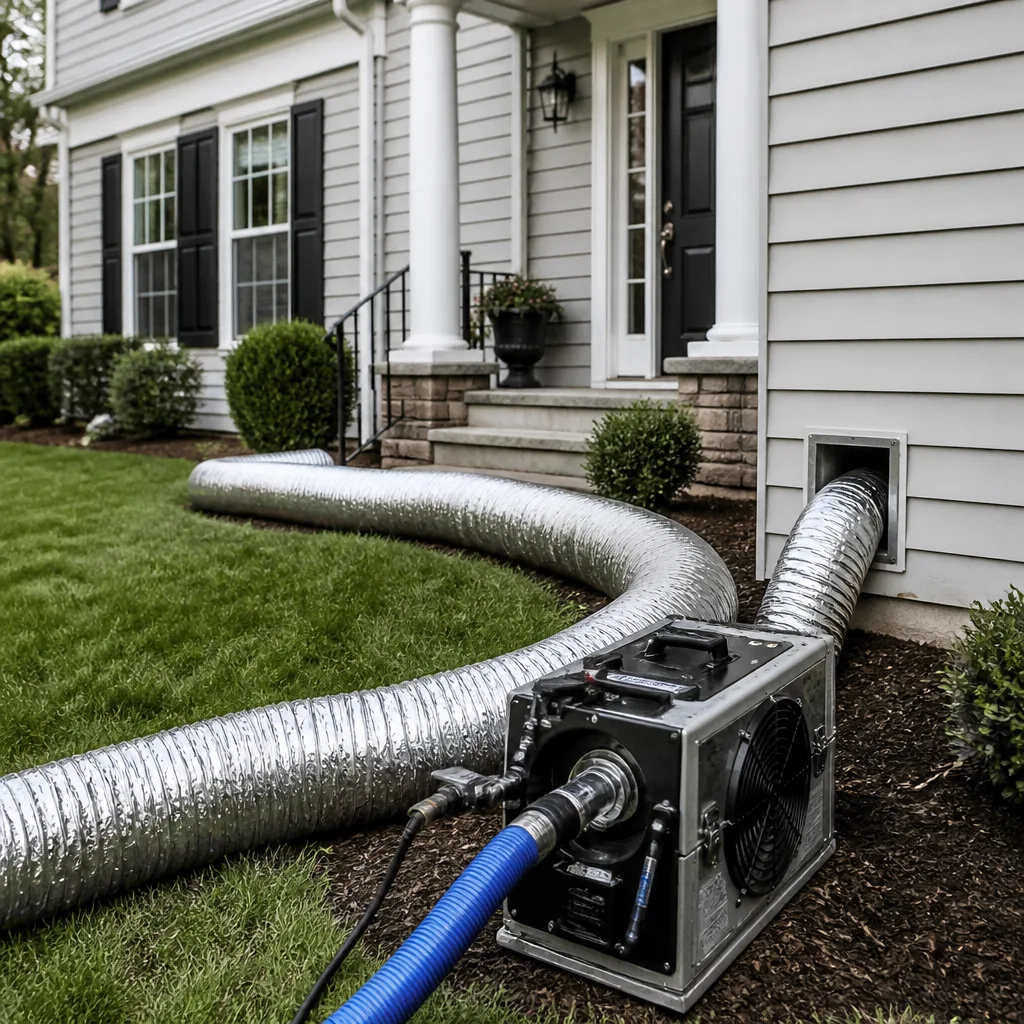 Whole-home duct cleaning
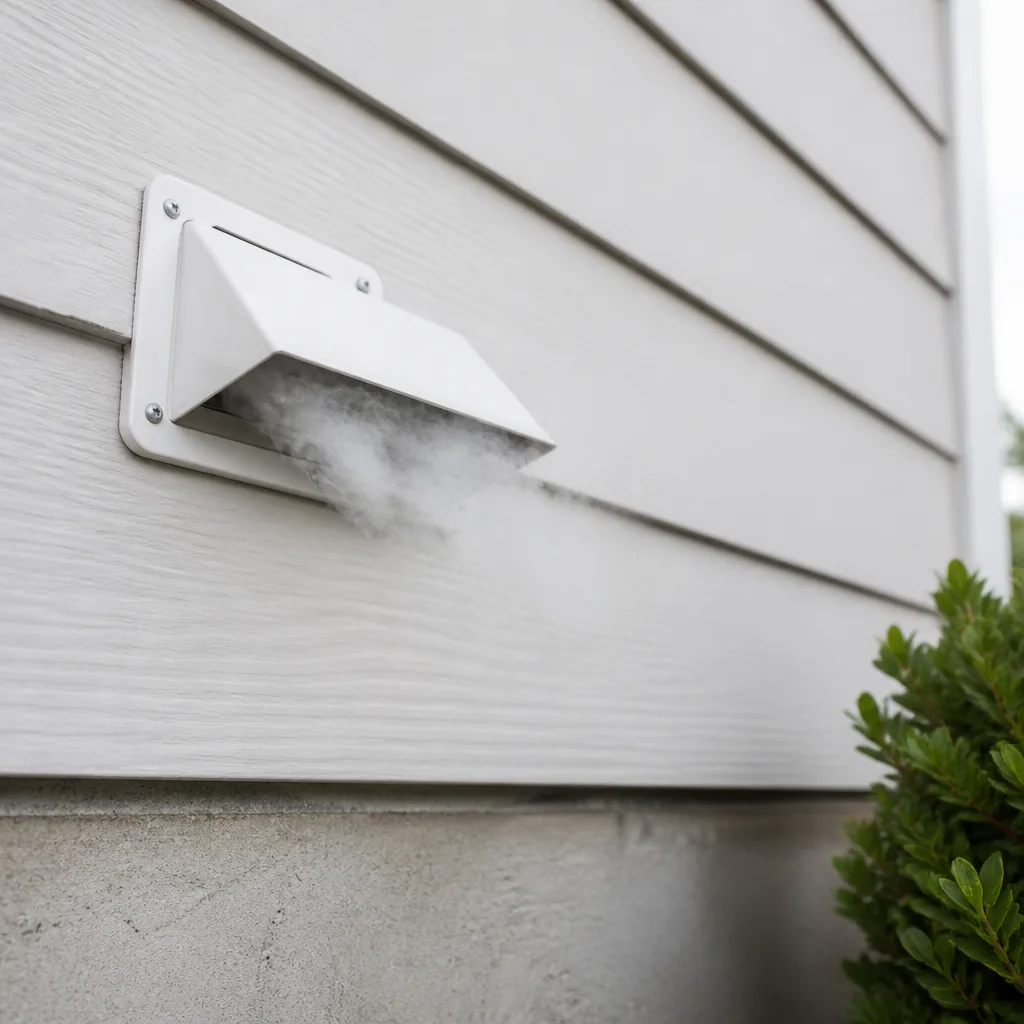 Dryer vent cleaning
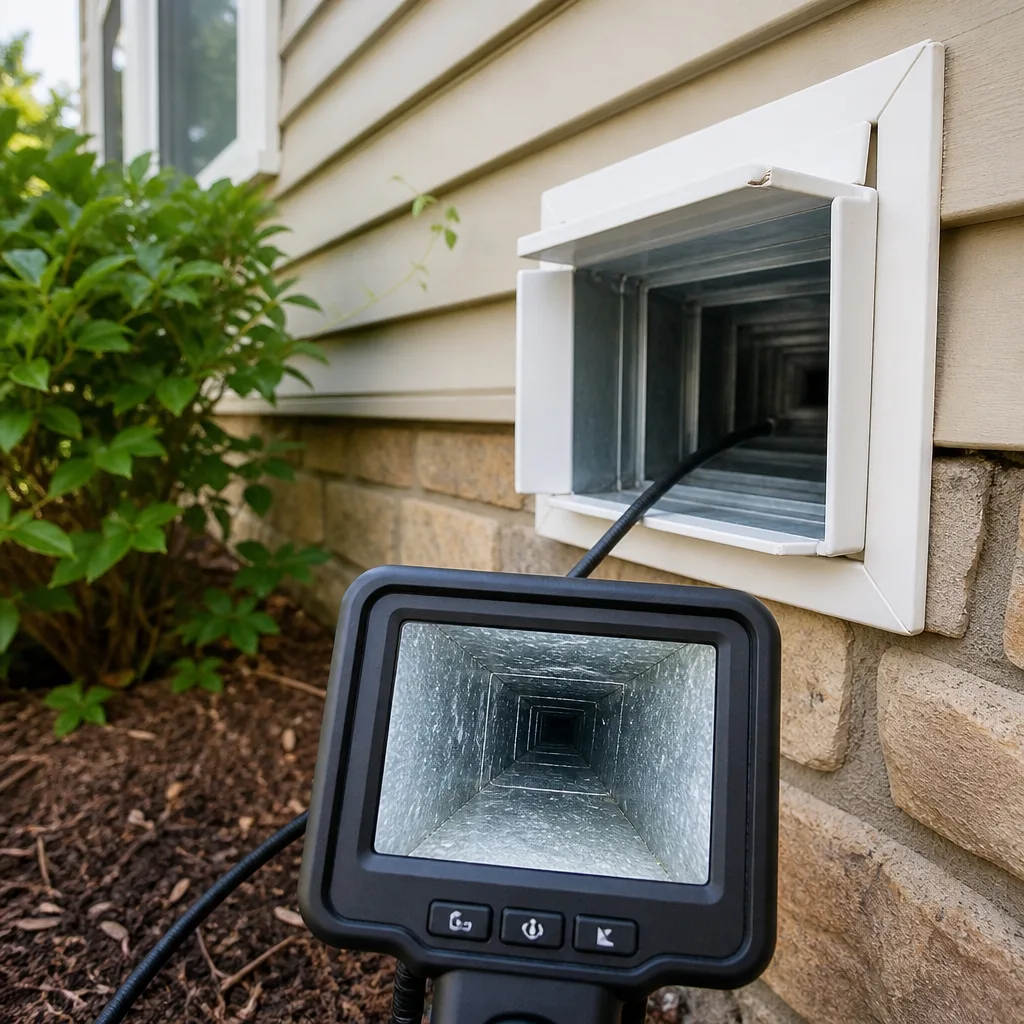 Camera inspection
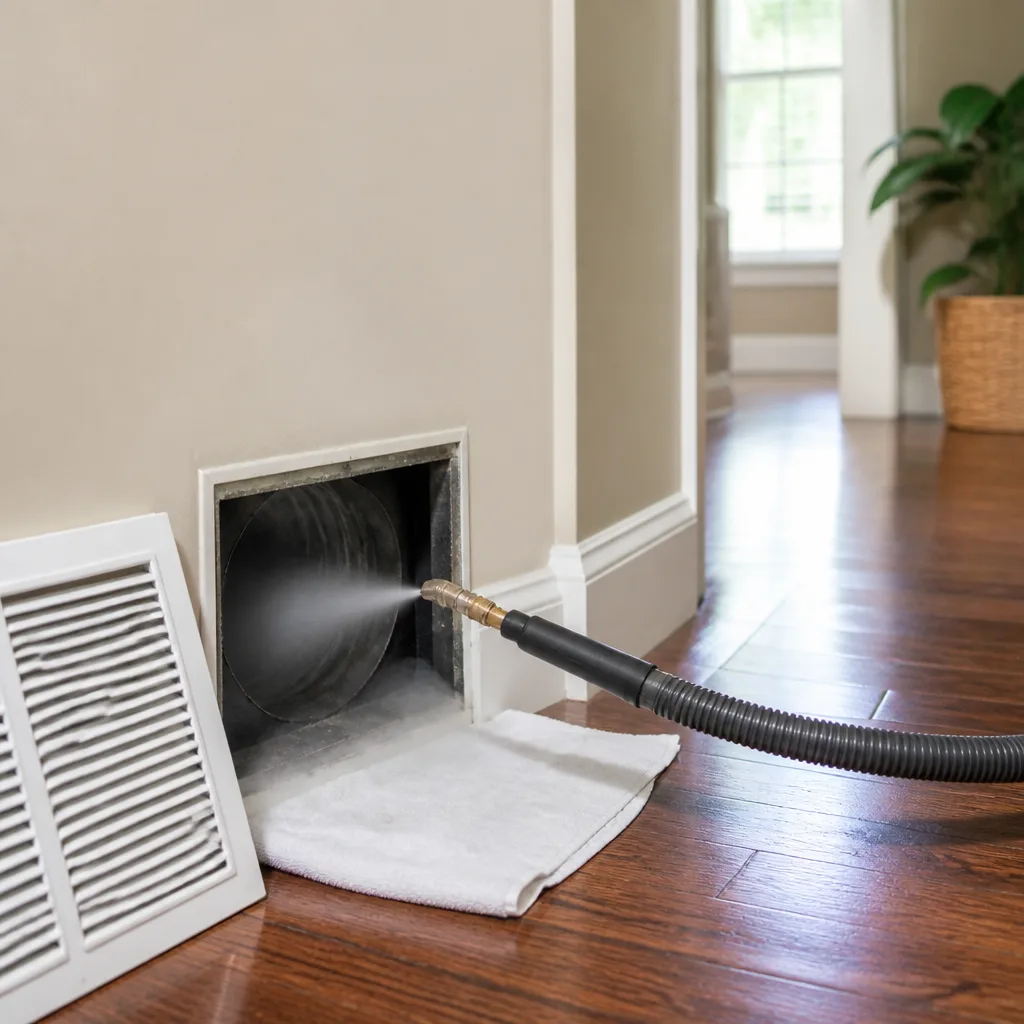 Sanitizing & deodorizing
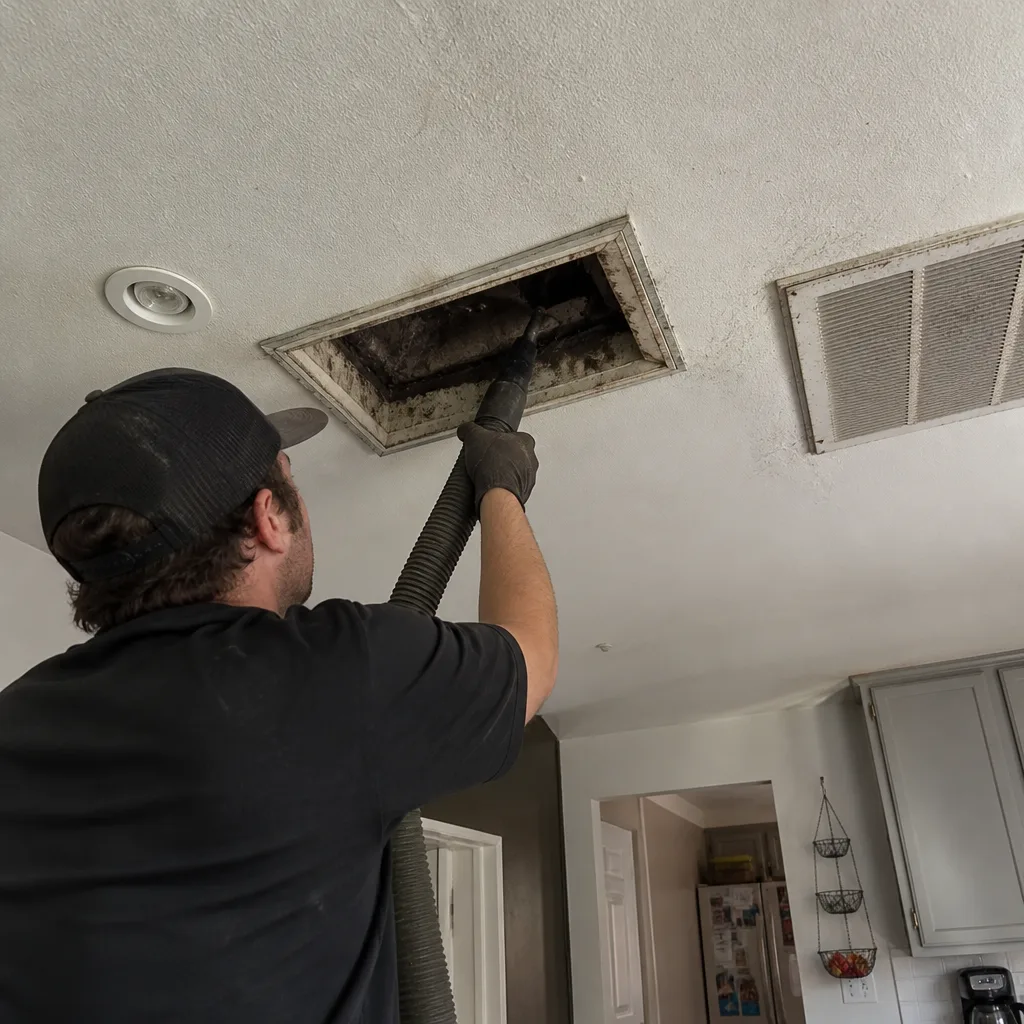
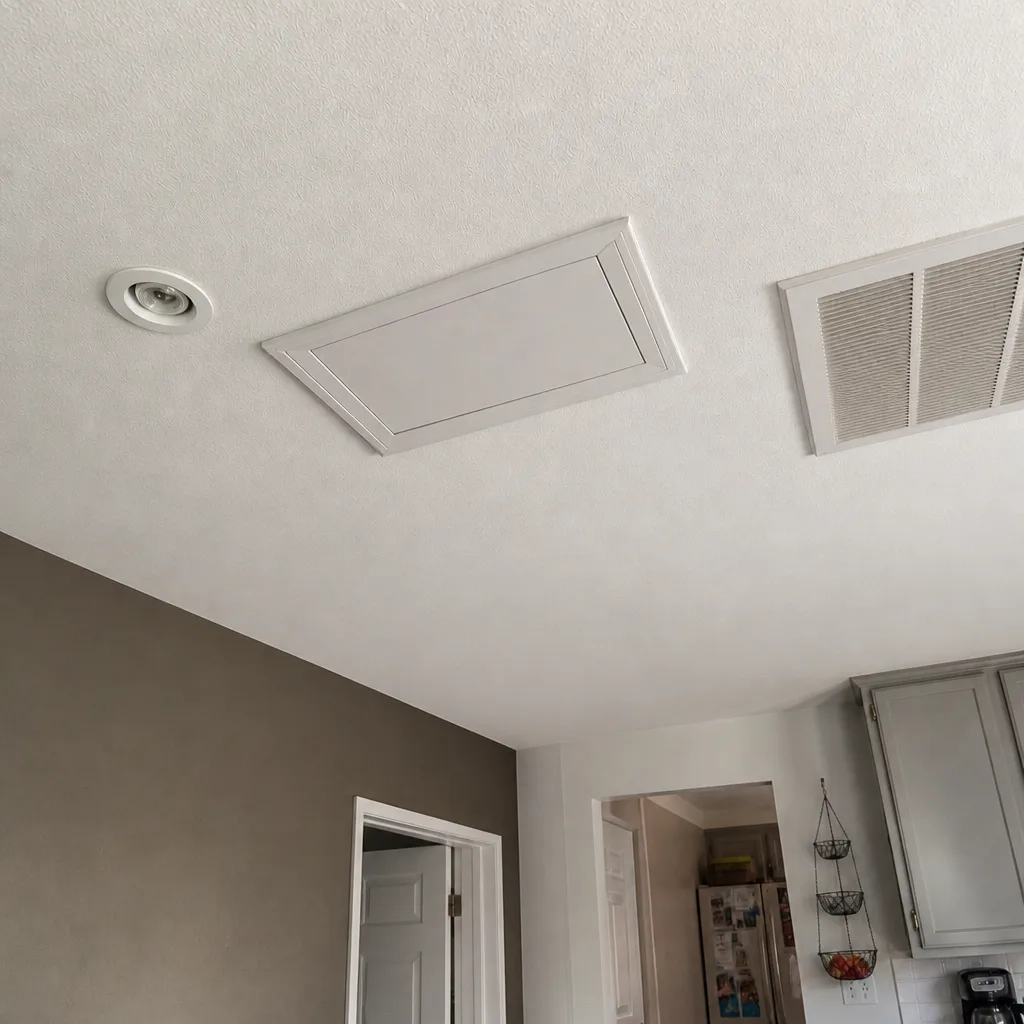
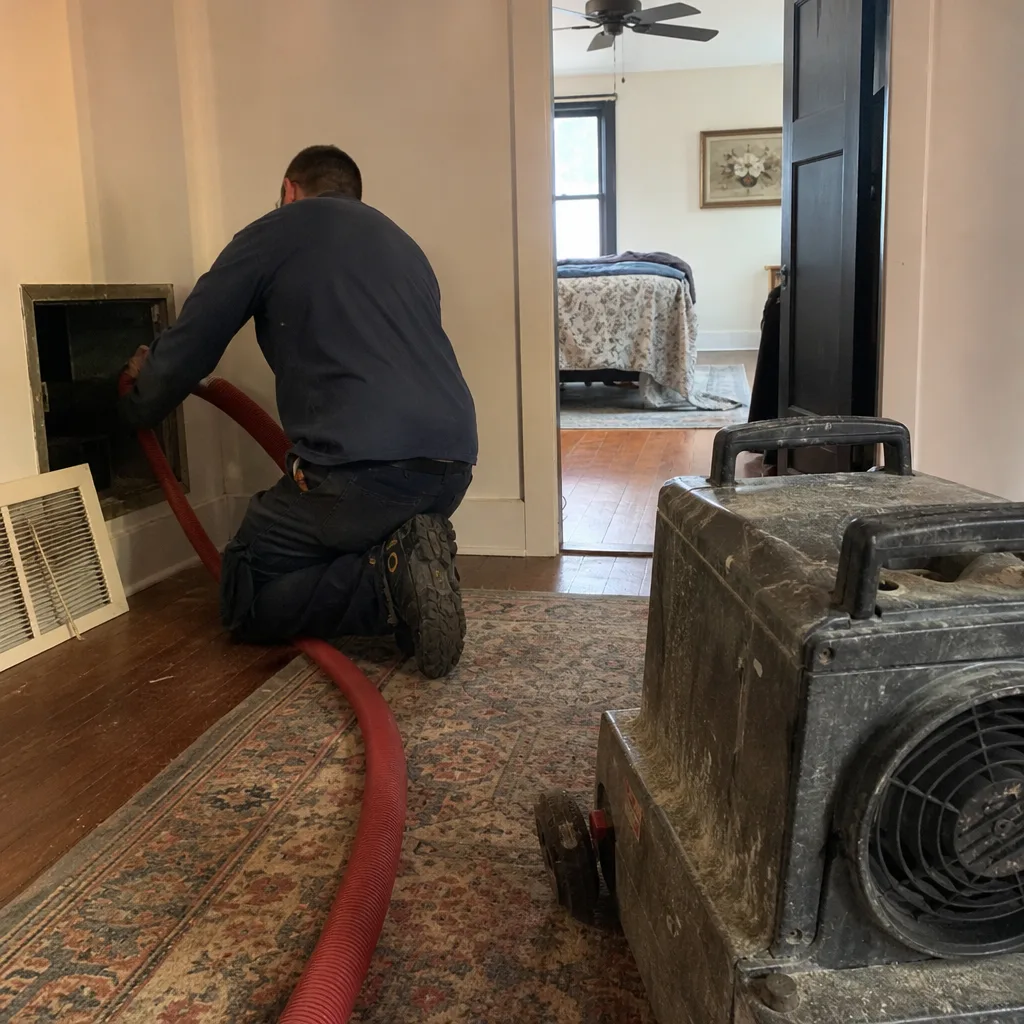
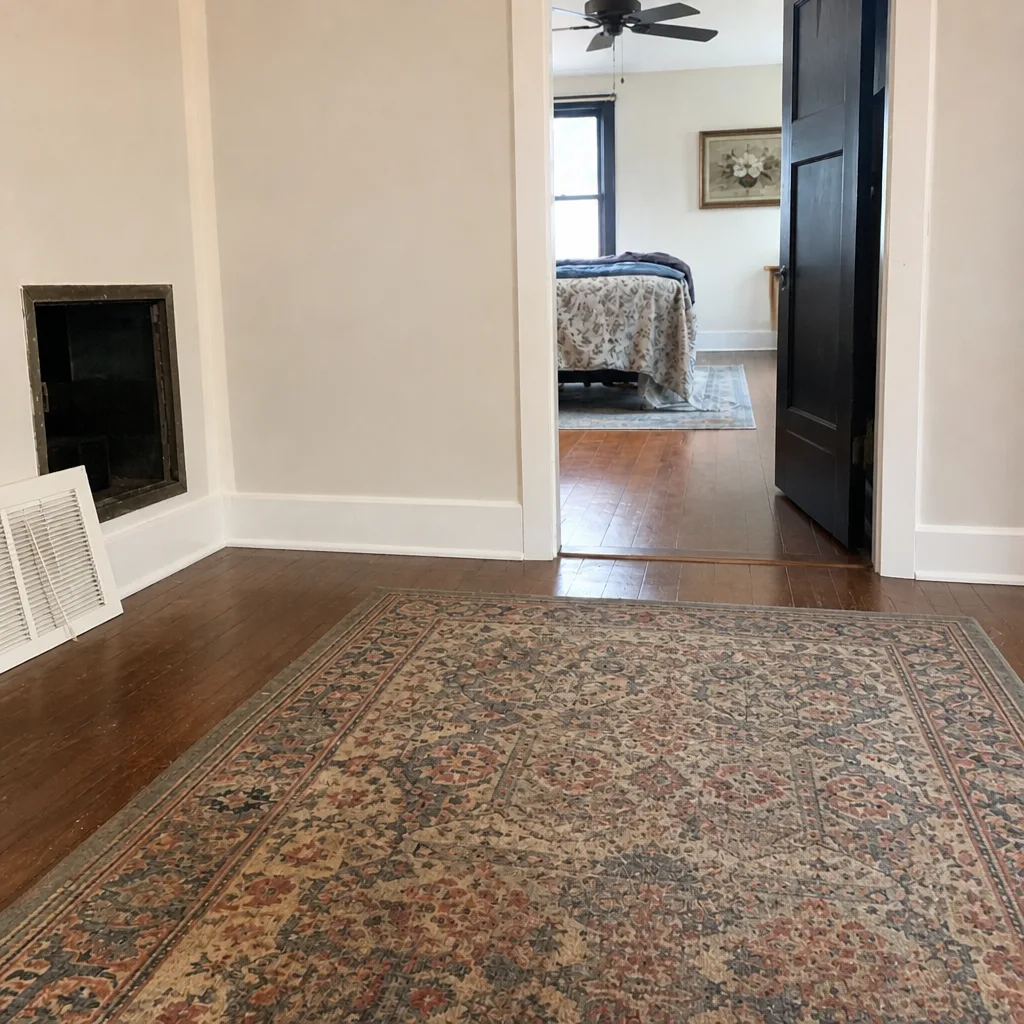
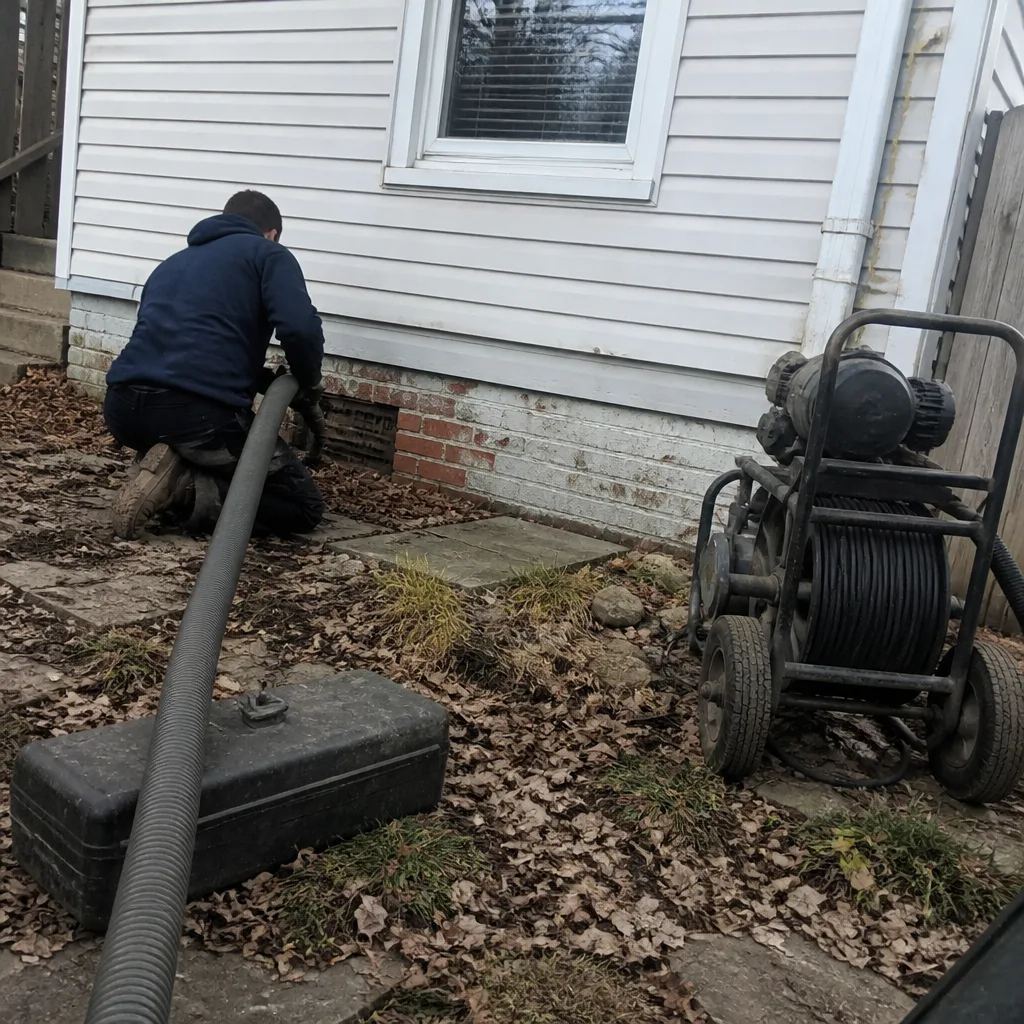
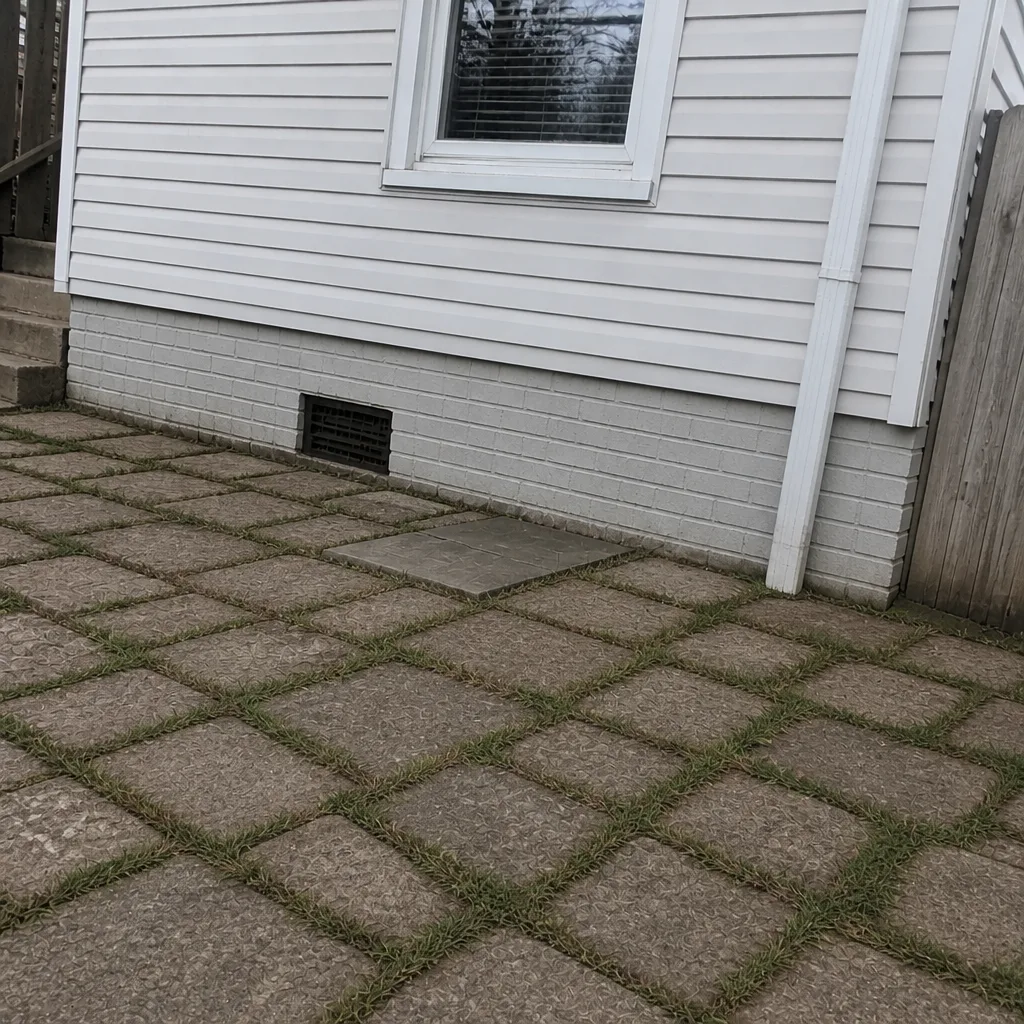
Whole-system duct and dryer vent check with before-and-after photos - you see exactly what came out of your vents
That "$99 whole-house special" is a bait ad - the real number appears once they are in your hallway, or the "clean" is a shop-vac at the register. We photograph the inside of your ducts before and after instead.
DIY vs Professional Air Duct Cleaning: The East Nashville Homeowner’s Decision Guide
A shop-vac and a dryer vent brush can clean the first 12 inches of your supply registers. That’s also the part of your duct system that matters least. The contamination that affects air quality and system performance sits 15 to 40 feet away, past the boot, around the first elbow, in the long trunk runs and the return chase where airflow slows and debris settles. In East Nashville, where so much of the housing stock predates modern ductwork standards, that gap between what a homeowner can reach and what actually needs cleaning is the whole story. This guide maps honestly what DIY can do, where it stops, and how to decide which path fits your house.
Styles & brands we work with
- Whole-home duct cleaning
- Dryer vent cleaning
- Camera inspection
- Sanitizing & deodorizing
Quick Answer
DIY air duct cleaning is genuinely sufficient for surface-level work: vacuuming return grilles, replacing filters on schedule, and wiping down accessible boots. It is not sufficient for cleaning the duct interior, because consumer equipment can’t create the negative pressure or mechanical agitation needed to dislodge and capture debris 15 to 40 feet inside the system. If your East Nashville home has visible dust blowing from registers, musty odors, recent renovation dust, or ductwork that has never been professionally serviced, professional cleaning reaches what DIY can’t.
Table of Contents
- What DIY Duct Cleaning Can Actually Reach
- What DIY Can’t Reach: The Physics of Distance and Airflow
- Why Negative-Air Pressure Changes the Job Entirely
- DIY Risk Scenarios in East Nashville’s Older Housing Stock
- When DIY Is Genuinely Enough
- A Four-Question Decision Framework
- DIY vs Professional: What You’re Actually Comparing
- Common Mistakes to Avoid
- When to Call a Professional
- Frequently Asked Questions
What DIY Duct Cleaning Can Actually Reach
Before you decide anything, it helps to know exactly where your own hand and your own vacuum can physically get to. In a typical East Nashville home, that’s a shorter list than most people expect.
- Supply and return grilles: The faceplate and the few inches of duct directly behind it. A vacuum brush attachment handles this well.
- Filter slots: Swapping a filter and vacuuming the slot around it is real maintenance and worth doing.
- Accessible boots: The transition box where the duct meets the floor or wall register. If you can reach it, you can wipe it.
- The first 12 inches of straight duct: A flexible brush can usually get this far on a short, straight run.
- Dryer vent lint trap and the first section of flex: Only the reachable portion near the appliance.
That covers register debris, surface dust, and the lint that builds up where you can see it. It does not cover the interior walls of the trunk lines, the return chase, or the elbows where debris actually accumulates. Most homeowners who try DIY are surprised to find that the register looks clean while the room still gets dusty within a week. The register wasn’t the problem.
One thing worth knowing: in older East Nashville homes, the boot and the first section of duct are often the least contaminated because they see the most airflow. The debris settles farther back, in the slow-moving sections where the air current drops off. Cleaning the front of the system is like sweeping a hallway and ignoring the closets.
What DIY Can’t Reach: The Physics of Distance and Airflow
The reason DIY stops around 12 inches isn’t laziness or lack of effort. It’s the geometry of residential ductwork and the way air moves through it. A standard residential trunk line runs 15 to 40 feet from the air handler to the farthest register. Around every elbow, the air slows, and the particulate it’s carrying drops out. That’s where the accumulation lives.
Three physical factors cap what consumer equipment can do:
- Reach: A brush on a flexible rod loses control past the first bend. It can’t navigate a 90-degree elbow, a takeoff, or a transition without kinking or snagging.
- Agitation: Duct walls hold a fine, adhered layer of dust and debris that has bonded over time. A shop-vac pulls loose surface material. It doesn’t scrape the wall. Rotary agitation does.
- Capture: A shop-vac creates suction at its hose opening, not inside the duct system. When you disturb debris inside a duct, it doesn’t travel to the vacuum opening. It goes airborne inside the house.
In our experience working East Nashville homes, that third point is the one homeowners underestimate most. A shop-vac in a return grille creates a small local vacuum, but the system’s other open registers become the path of least resistance for dust you’ve just knocked loose. You don’t see it happen, because the particles are small and they settle into the same rooms you were trying to fix.
Professional cleaning solves all three at once with rotary-brush agitation and contained HEPA extraction. We run HVAC cleaning equipment purpose-built for duct interiors: a rotary brush on a flexible shaft that reaches around elbows, and a HEPA-rated vacuum that captures the debris as the brush loosens it. That’s a different job, not an upgraded version of a shop-vac.
Why Negative-Air Pressure Changes the Job Entirely
Negative air pressure is the concept that separates a professional duct cleaning from a confident homeowner with a shop-vac. When equipment draws air out of the duct system while a filter captures particles, the whole system becomes a controlled environment. Debris that gets knocked loose goes toward the vacuum instead of into the room.
That’s what our Abatement Technologies filtration devices do during the job. They maintain containment in the living space while the ducts are being cleaned, so the work you paid for doesn’t end up as dust on the furniture. The Nikro HEPA-rated extraction equipment does the pulling. A rotary-brush system does the dislodging. All three pieces work together, and none of them has a consumer equivalent.
There’s a second benefit to negative pressure that doesn’t get talked about enough. When a system is under controlled vacuum, you can verify that the extraction is working by watching what comes back. That’s why professional crews take before-and-after photos of the duct interior. The proof is in the capture, not in the promise.
For East Nashville homeowners with allergy or asthma concerns, this matters most. The thing you’re trying to remove is a fine particulate: settled dust, renovation debris, and the biological growth that follows moisture in an older system. Disturbing that material without containment makes the problem briefly worse. Contained extraction and post-clean sanitizing with Honeywell or Aprilaire-compatible products address it at the source.
DIY Risk Scenarios in East Nashville’s Older Housing Stock
East Nashville has a wide range of housing: renovated bungalows, mid-century ranches, newer builds, and homes that have stood for many decades with the same duct system. That mix creates specific DIY risks that don’t apply quite the same way in a newer subdivision.
- Flex duct puncture: Older flex runs can become brittle and lose their inner liner adhesion. A brush that snags or a rod that pierces the liner creates a leak that costs more to repair than the cleaning would have.
- Disturbing settled debris without capture: In a duct that’s never been serviced, the settled material can carry biological growth and fine renovation dust. Loosening it without negative pressure spreads it into the living space.
- Dislodging insulation: The interior liner of older ductboard or insulated flex can flake when disturbed. Loose insulation inside a duct then travels to registers and into rooms.
- Damaging the air handler: Pushing debris toward the air handler instead of away from it can foul the blower or evaporator coil. That’s a call for a technician, not a Saturday afternoon.
- Over-pressurizing a sealed system: A shop-vac operating while the HVAC system is running can move air in ways the duct design didn’t anticipate, straining joints and seals.
We repair what we find, not just clean around it. When we open up an East Nashville system that’s been through a DIY attempt, we often find liner damage or a joint that pulled loose. That’s what our Duct Repair & Sealing service exists for: sealing the leak so the cleaning stays effective and the energy loss stops.
The mild, humid East Nashville climate adds a wrinkle. Condensation forms in ductwork when cool supply air meets warm, moist attic air in the summer. Any breach from a DIY mishap becomes a moisture intrusion point, and moisture is what feeds microbial growth inside a duct. On this side of the decision, the stakes go beyond cleanliness.
When DIY Is Genuinely Enough
We’ll say it plainly: not every East Nashville home needs a professional duct cleaning right now. There are real scenarios where the homeowner can handle the work and get a good outcome. Here’s when DIY is a reasonable call:
- You’re doing routine maintenance on a system that’s been cleaned before. If your ducts were professionally cleaned recently and you’re keeping up with filter changes, register vacuuming is sufficient.
- The problem is surface-level register dust. If you can see the dust on the grille and it comes off with a brush, that’s a register problem, not a duct problem.
- You just want to change your filters on schedule. Filter replacement is the single most valuable thing a homeowner can do for air quality and system efficiency. Do it.
- The ducts are newer and the home hasn’t had renovation dust. A recently built East Nashville home with clean ductwork doesn’t need a professional visit to stay clean.
- You can reach and clean the boots and grilles safely. Running a vacuum brush over each register once or twice a year is real maintenance.
What these scenarios share is that they’re all surface-level. They’re about the parts of the system you can see and reach. That’s a legitimate part of home maintenance. The distinction is that surface-level maintenance doesn’t substitute for an interior cleaning, and it doesn’t offer the verification that comes with a before-and-after inspection.
If you’re in doubt, the honest thing to do is assess whether you have any of the signals that point to interior contamination. We’ll cover those in the next section. Our air duct cleaning service exists for the systems that need more than a register wipe-down, and if yours doesn’t, we’d rather tell you that than sell you a job you don’t need.
A Four-Question Decision Framework
Here’s the framework we’d suggest to any East Nashville homeowner weighing DIY against a call. Answer these four questions honestly and the decision usually makes itself.
- When were the ducts last professionally cleaned? If you don’t know, or if it’s been many years, the interior has accumulated material that DIY can’t reach. That’s a professional visit.
- Is there evidence of interior contamination? Look for dust blowing from registers when the system kicks on, a musty smell when the air runs, visible dark buildup inside a return, or rooms that get dusty within days of cleaning. Any of these means the interior needs attention.
- Has the home had recent renovation or a moisture event? Drywall dust, sawdust, and water intrusion all leave material inside the duct system. DIY won’t remove it and won’t contain it during the attempt.
- Does anyone in the home have allergy or asthma concerns? If the answer is yes, containment matters more than it does for an average household. Contained extraction is the difference between a clean house and a temporarily dustier one.
If you answered “yes” to any of the last three questions, professional cleaning is the right call. If your ducts were serviced within the last few years and the only issue is surface register dust, DIY maintenance is a reasonable way to keep things in good shape between professional visits.
There’s an integrity point in this framework. A business that answers “professional” to every question isn’t giving you a decision guide. It’s giving you a sales script. Our standard for air duct cleaning East Nashville is to be honest about what a system actually needs, and the equipment is on the truck either way.
DIY vs Professional: What You’re Actually Comparing
The cost comparison between DIY and professional duct cleaning is not apples to apples, and that’s worth being explicit about because most comparisons only look at the dollar figure on one line. DIY has a low cash cost and a real quality ceiling. Professional cleaning has a higher cash cost and a scope of work that includes reach, agitation, capture, and verification.
Here’s the honest breakdown of what each path actually delivers:
| Work item | DIY | Professional |
|---|---|---|
| Register and grille wipe-down | Yes | Yes |
| Filter replacement | Yes | Yes, as part of service |
| Accessible boot cleaning | Usually | Yes |
| Interior duct wall agitation (15-40 ft) | No | Yes, with rotary equipment |
| Contained extraction of debris | No | Yes, HEPA-rated vacuum |
| Containment of disturbed particles | No | Yes, negative air filtration |
| Sanitizing at the source | No | Yes, Honeywell or Aprilaire-compatible |
| Duct repair and sealing if needed | No | Yes |
| Before-and-after verification | No | Yes, with photos |
The right frame is not “which costs less” but “what does the job actually need to accomplish.” If the goal is register cleanliness, DIY wins on cost and it’s fine. If the goal is interior cleaning, only one path gets there, and the cost comparison has to include the consequences of an incomplete job: a system that still distributes dust, energy loss from leaking joints, and in older East Nashville homes, potential liner damage from a snagged brush.
Pricing for professional cleaning is per job by written estimate. The estimate sets the final price, and it’s free. Call (877) 417-5183 for an exact quote.
Common Mistakes to Avoid
- Vacuuming while the HVAC system is running. The air handler pulls debris toward the blower and coil. Turn the system off before any register work, and know that professionals seal the system during extraction for the same reason.
- Using a shop-vac on a duct that’s never been cleaned. You’ll loosen settled material into the airstream without capturing it. The rooms get dustier before they get cleaner, and sometimes they don’t recover until a real cleaning happens.
- Piercing or kinking flex duct with a brush. This is common in East Nashville homes with older flex runs. Once the liner is punctured, you’ve traded a cleaning problem for a repair problem.
- Assuming a register that looks clean means the ducts are clean. Registers are the least contaminated part of the system. Interior debris lives in the trunk runs and return chase.
- Skipping the dryer vent because it wasn’t part of the duct plan. dryer vent cleaning is a fire-risk reduction service on its own, and lint buildup is one of the most common causes of residential house fires. It’s not optional maintenance.
- Disturbing insulated ductboard without knowing its condition. Older interior liners can flake. Running a brush through them without inspection spreads insulation into the airstream.
- Cleaning once and never maintaining. Even after a professional cleaning, filters need changing on schedule and registers need routine vacuuming. A clean system needs maintenance to stay clean.
When to Call a Professional
Call a professional when the work requires reach, containment, or repair beyond what consumer tools can do. Those scenarios include: ducts that have never been serviced, visible dust discharging from registers, musty odors from the system, recent renovation or water intrusion, allergy or asthma concerns in the household, and any sign of liner damage or leaking duct joints. If you’ve tried DIY and the problem came back within a week, that’s the signal that the contamination was farther in than you could reach.
Air Duct Cleaning East Nashville offers free estimates in East Nashville. Our technicians have up to 13 years of experience, we use Rotobrush and Nikro equipment, and our Duct Repair & Sealing service handles the root causes, not just the cleaning. We answer 24/7. Fast dispatch from 7am to 7pm, Sunday through Friday. Call (877) 417-5183 to schedule a free estimate.
Frequently Asked Questions
About 12 inches on a straight run, less around a bend. Consumer brushes and shop-vac hoses lose reach and control past the first elbow, which is exactly where debris accumulates. The interior duct walls 15 to 40 feet into the system need rotary equipment that can navigate transitions and agitate the duct surface.
Register vacuuming handles the surface, not the interior. If your ducts have never been serviced or if you’re seeing dust, odors, or new buildup after a cleaning, the interior needs professional attention. Call (877) 417-5183 for an exact quote – estimates are free.
The main risks are puncturing brittle flex duct, dislodging settled debris without containment, and disturbing older insulation that’s begun to flake. Each of those turns a cleaning problem into a repair problem. If your system is decades old or you’re unsure of the duct material, a trained professional should assess it first.
Cheap quotes usually deliver surface-level work with repurposed equipment, sometimes a shop-vac and a promise. A quote based on real containment, rotary agitation, HEPA extraction, and before-and-after photos reflects a different scope. Call (877) 417-5183 for a straightforward quote – estimates are free.
Ask for before-and-after photos of the duct interior. Any crew using real equipment can show you what they found and what they left behind. Ours take that documentation as part of the job, so the proof travels with the service.
You can clean the lint trap and reach the first section of vent near the dryer. Beyond that, the vent run has elbows and a termination point where lint accumulates out of sight, and lint buildup is a fire risk. dryer vent cleaning as a professional service gets to the parts you can’t reach. Call (877) 417-5183 for an estimate.
There’s no fixed schedule that fits every home. A house with allergies, pets, recent renovation, or years since the last cleaning needs attention sooner than a newer build that’s been maintained. The rule we’d suggest: clean when you have evidence of interior contamination, and maintain between cleanings with filters and register vacuuming.
The Bottom Line
DIY duct cleaning is a legitimate part of home maintenance for surface-level work: registers, filters, accessible boots. It is not a substitute for interior duct cleaning, because the physics of reach, agitation, and capture rule it out past the first elbow. The contamination that affects air quality and system performance accumulates 15 to 40 feet away, and only rotary agitation plus contained extraction reaches it. In East Nashville’s older housing stock, the wrong DIY attempt can leave you with a repair. Answer the four-question framework honestly, and you’ll know which path fits your house. If it’s the professional one, our team is ready to help.
Call (877) 417-5183 for a free estimate. We answer 24/7. Fast dispatch from 7am to 7pm, Sunday through Friday. See what’s inside your ducts, and what we remove.
Written by the team at Air Duct Cleaning East Nashville.
See the difference
 Before
 After
 Before
 After
 Before
 After