
Nikro Air Duct Cleaning in East Nashville: A Homeowner’s Guide
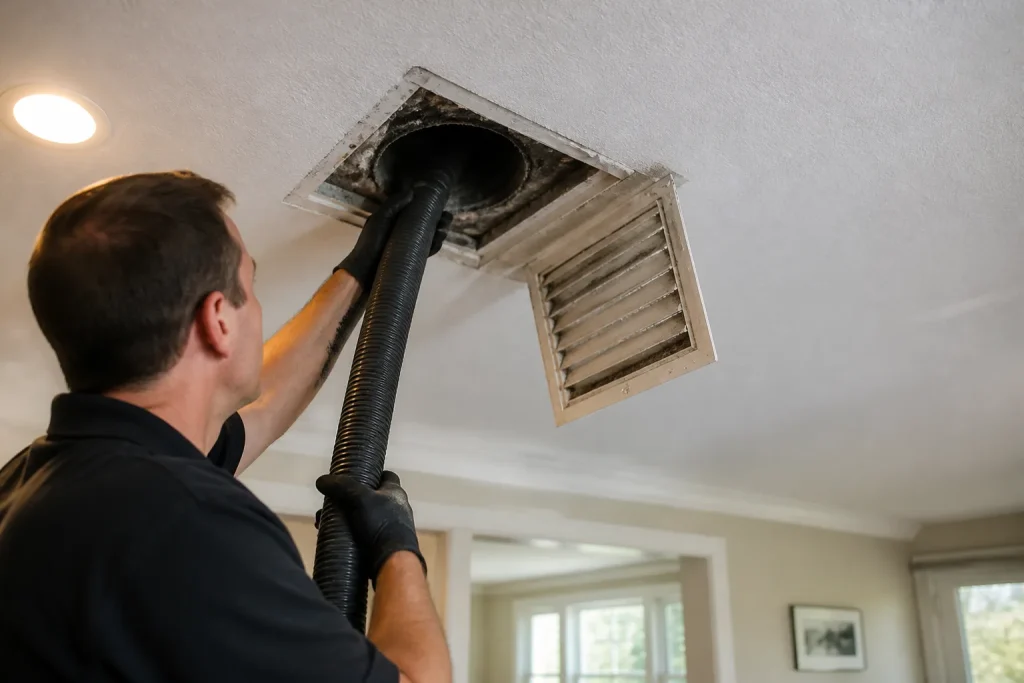
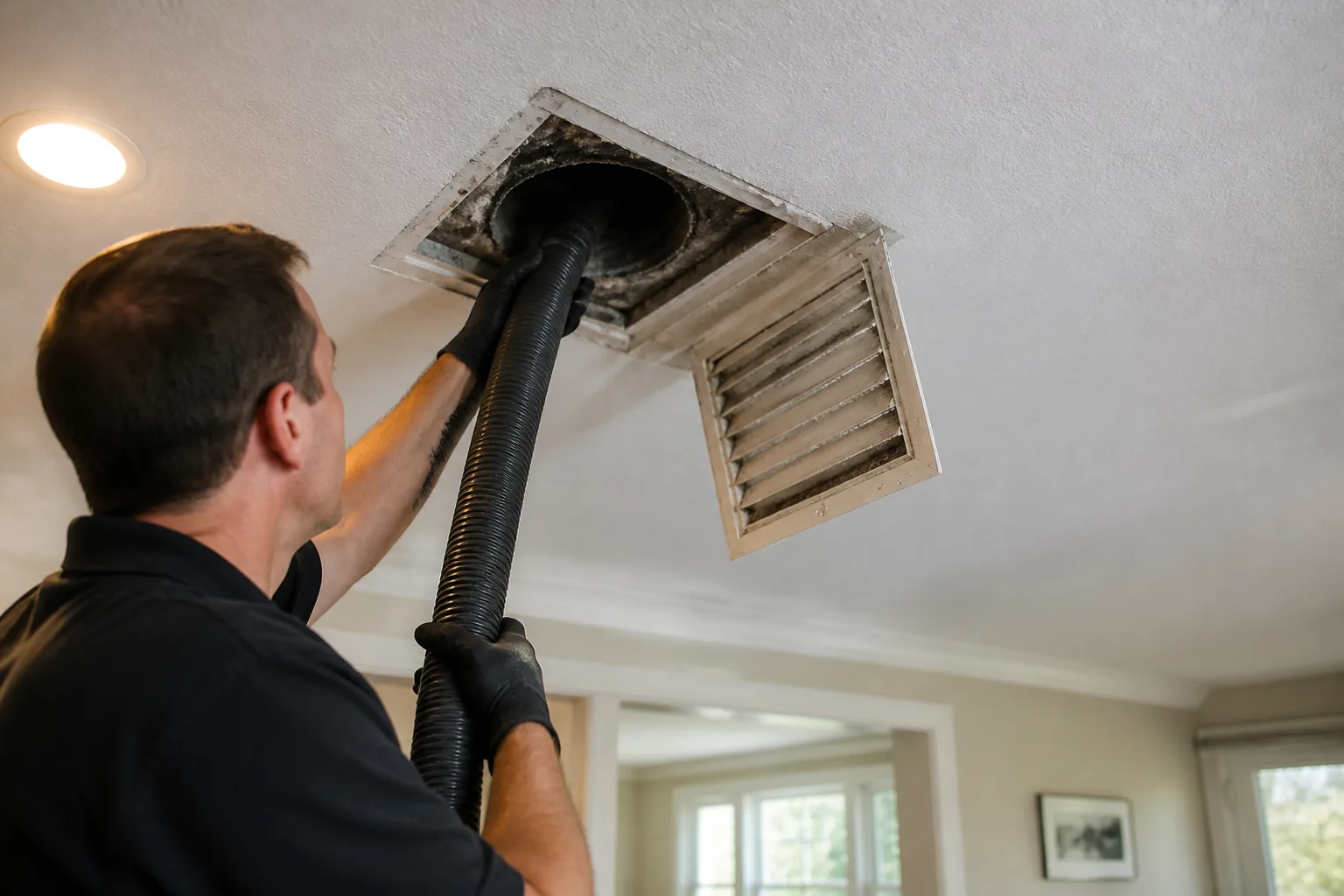
Most homeowners in East Nashville who ask about Nikro equipment can’t actually tell you what makes it different from the vacuum in their garage. Here’s the short answer: a Nikro unit puts your entire duct system under sustained negative pressure while the agitation tool is working, so the debris it loosens gets pulled toward the machine instead of drifting into your living room. That single design choice separates a real duct cleaning from a very expensive dust storm.
How much suction does a Nikro unit actually generate?
A typical shop-vac pulls somewhere in the range of 1 to 2 inches of water column (the measurement used to express the pressure a vacuum can sustain). A Nikro industrial duct-cleaning unit generates up to 12 inches. That gap isn’t a spec-sheet flex; it’s the physics that decides whether loosened debris gets captured or recirculated into your home.
Why does the number matter so much in a house? Because duct systems are long, branched, and full of places where air wants to slow down. A weaker vacuum loses pressure at the far end of a run, so agitation at the last register just pushes dust around inside the duct rather than pulling it back to the machine. The stronger pull keeps the whole system under tension from the trunk to the farthest branch, which is the only way a technician can be confident the debris actually left.
If you’ve had a “duct cleaning” before and watched dust settle on the furniture a few days later, weak suction compounded by poor port placement is often the reason. The machine has to be tied into the system correctly for any of that pressure to count.
What does negative pressure actually mean inside my ducts?
Negative pressure means the air pressure inside your ductwork is lower than the air pressure in your rooms. When a duct gets disturbed under those conditions, air rushes toward the duct, not out of it. That’s why the vacuum must be connected upstream of the agitation point (closer to the machine in the airflow direction), not downstream of it.
Think of it as vacuuming a rug in a closed room versus an open window. The closed room lets the vacuum build a pressure differential that traps dirt. The open window lets room air fight the vacuum head and blow dust everywhere. A duct system works the same way: if the machine is on the wrong side of the agitation, every brush stroke pushes debris into the very air you breathe.
In actual practice, the connection sequence looks like this:
- The Nikro unit is tied into the main trunk line through a sealed access port, usually cut into the plenum or a convenient trunk section.
- The technician confirms the rest of the system is sealed off so no unfiltered air escapes through return grilles.
- Agitation happens one branch at a time, working from the farthest register back toward the machine so debris always travels toward the vacuum.
- A final draw pulls the whole system clear before access ports are resealed and register covers go back on.
In our experience, most problems with a duct-cleaning outcome trace back to skipping one of those four steps, not to the machine.
What are Nikro’s HEPA filtration stages, and what do they catch?
Nikro units run captured air through a staged filtration stack before it exhausts back into the room. The stages typically progress from coarse pre-filters that catch large debris and construction dust, through intermediate filters that trap mid-sized particles, to a HEPA final stage rated to capture particles at 0.3 microns. That last stage is the one that matters if anyone in your East Nashville home has asthma or an allergy diagnosis.
Why 0.3 microns? Because it’s roughly the size at which the human lung is least able to clear particles on its own, and it’s the benchmark the HEPA standard is defined around. Fine particulate from dust mites, mold spores, pet dander, and drywall dust all live in or near that range. A HEPA final stage captures a very high percentage of them before the exhaust air leaves the machine.
Particle size isn’t a detail you can skip when evaluating a quote. A machine that only has a coarse bag filter (or worse, no filter at all beyond a shop-vac cartridge) may technically pull debris out of the ducts, but it can aerosolize the finest particles right back into the living space. That’s the difference between a clean job and a cleanup job.
We use Abatement Technologies negative-air machines alongside the Nikro vacuum on bigger or messier jobs to keep the entire workspace under filtration while the work is going on. Two layers of containment isn’t overkill; it’s the way to make sure the living room stays out of the equation.
What does a real Nikro job look like, step by step?
A legitimate Nikro duct cleaning has a repeatable sequence, and homeowners should expect to see it happen. If a technician arrives with a Nikro-branded machine but skips the port placement and containment setup, they’ve only borrowed the brand name.
- 1
Walkthrough. The technician maps the system, notes flex vs. rigid duct, and identifies the equipment location. In older East Nashville bungalows this step often uncovers return duct runs that were added later, which changes the layout of the job.
- 2
Access port placement. Ports are cut into the trunk and any main branches so agitation tools can reach the whole system. They get resealed at the end.
- 3
Trunk line connection. The Nikro unit is sealed into the trunk through one of those ports and the rest of the system is closed off so the unit can build negative pressure.
- 4
Branch-by-branch agitation. The technician works each branch from the farthest register back with a rotary brush or air whip while the vacuum holds the system under suction. Debris travels toward the machine the entire time.
- 5
Final vacuum draw. With agitation complete, the machine pulls the system clean, and the technician checks register openings and duct interiors to confirm.
- 6
Sanitizing (optional but often recommended). If microbial growth or odor was part of the problem, a sanitizing agent is applied after cleaning and before registers go back on.
- 7
Port resealing and photos. Access ports are sealed, and before-and-after photos of your own ducts are shown so you can see exactly what changed.
Timewise, a typical single-family home in this part of town takes a few hours depending on the number of registers and the state of the system. Rush it and you’ll miss branches; do it right and the difference is visible.
Nikro vs. Rotobrush: which one does your ducts actually need?
This is where duct cleaning stops being a one-tool trade. Nikro is the right call when debris type leans toward fine particulate, microbial growth, or pet dander, and the goal is sustained suction plus HEPA-grade filtration. Rotobrush is the better starting point when the ducts are loaded with thicker, clumped material (drywall dust from a renovation, settled lint, decades of household buildup) that needs mechanical brushing to break it loose before any vacuum can capture it.
A well-run job often uses both: Rotobrush rotary-brush agitation to loosen the heavy stuff, with the Nikro unit running the whole time to pull the results out through HEPA filtration. If a quote only mentions one machine and no mention of how the system gets sealed off, that’s a question worth asking.
When Nikro alone is the right fit
Lighter debris loads, homes where an allergy or asthma diagnosis is the reason for cleaning, and any job where indoor air protection during the work matters more than brute-force agitation. This is also the right machine when sanitizing will follow, since the duct system is already under clean, filtered airflow.
When Rotobrush should lead
Renovation dust, clogged returns, and systems with visible debris on register faces. In those situations the brushing step is not optional, and the vacuum’s job is to capture what the brush loosens.
Why does East Nashville humidity matter for what Nikro removes?
East Nashville summers run humid, and humid air that sits in an air-conditioned duct system has a well-known effect: it supports microbial growth on the interior surfaces of flex duct liners. Flex duct is especially vulnerable because its inner liner is a plastic film that can hold a thin moisture film even when the airstream itself is dry. Biofilm (the slimy mixed community of mold, bacteria, and dust that builds up on those surfaces) doesn’t come off with a light dusting.
This is where the Nikro machine has a specific advantage. It can hold sustained suction on the liner surface while agitation works the growth loose, and its HEPA final stage traps the dislodged biological material instead of exhausting it back into the room. A weaker, unfiltered machine trying to remove biofilm typically just breaks it up without containing it.
If your home has ever had a slow condensate leak, a return duct run through an unconditioned crawlspace, or a dehumidification problem, the chance of biological growth inside the ducts is higher. Cleaning alone doesn’t fix the source; sealing the duct system or correcting the moisture path matters as much as the vacuum. That’s why we offer duct repair and sealing as part of the same visit when the situation calls for it.
When to call a pro
Some things are homeowner-friendly: changing filters, checking register faces, vacuuming the grilles. Others aren’t. If you’re seeing dust puffing out of a register when the air handler kicks on, if there’s visible biological growth around a return, if a renovation just wrapped and you didn’t seal off the supply ducts during the work, or if anyone in the house has a diagnosed respiratory condition, it’s worth having someone with the right equipment take a look. Ductwork is also not a place to improvise with a shop-vac: improper agitation can distribute contaminants through the house faster than any filter can catch them.
If you’d rather not spend your Sunday wrestling a hose into a return drop, call us. We’ll tell you honestly whether a full cleaning is needed or whether a smaller fix will do the job.
Related services in East Nashville
If your ducts are already clean but the air handler itself has buildup, HVAC cleaning addresses the parts the airstream passes through. If you’re not sure whether the ducts need cleaning at all, our main page on Air Duct Cleaning East Nashville walks through the deciding factors. And if the lint trap on your dryer has been quietly losing ground, standalone dryer vent cleaning is the safety-first move before anything else. When the system needs full coverage, our guide to air duct cleaning covers the whole picture.
What a Nikro job costs in East Nashville – and why quotes vary so much
Most whole-home duct cleanings in East Nashville land somewhere between a modest mid-three-figure estimate for a smaller single-story home and a higher figure for a larger multi-zone house with a renovation-dust load and sanitizing included. There’s no honest way to quote per-vent, because the work is priced per system, not per opening. If a quote is per-register, ask what the all-in figure is before you commit.
- Standard whole-home cleaning: priced per system, based on number of registers, trunk length, and duct type.
- Cleaning plus sanitizing: adds a disinfecting step for homes with odor or allergy concerns.
- Duct repair and sealing: priced separately after inspection, since scope depends on what’s found.
- Dryer vent cleaning (standalone): quoted on its own, since it’s a different system entirely.
We set one flat price per system, agreed before any work starts, with before-and-after photos of your own ducts as the record of what was done. The written estimate is what sets the final price.
The Bottom Line
Nikro equipment earns its reputation the way any tool does: by doing something measurable that a lesser tool can’t. Up to 12 inches of sustained suction, staged HEPA filtration, and a job sequence that seals the system before agitation starts – those are the differences that matter. If a quote mentions Nikro without mentioning port placement, containment, or filtration stages, ask the questions you now know to ask. And if you’re in East Nashville and need help deciding between cleaning, sealing, or a different approach entirely, Air Duct Cleaning East Nashville offers free estimates. Call (877) 417-5183.
Frequently Asked Questions
Suction pressure, mainly. A shop-vac generates roughly 1 to 2 inches of water column; a Nikro industrial unit reaches up to 12 inches. That’s the difference between debris getting captured and debris getting recirculated into living spaces. A shop-vac also typically lacks the staged HEPA filtration a Nikro unit uses to trap particles down to 0.3 microns.
It depends on debris type. Nikro is the right choice for fine particulate, microbial growth, and allergy-driven needs because of its sustained suction and HEPA filtration. Rotobrush mechanical brushing is the better starting point for thick, clumped debris like renovation dust or years of settled lint. Many jobs use both, and the agitation step is where Rotobrush shines while the Nikro unit runs the whole time. Call (877) 417-5183 for an assessment – estimates are free.
Most homes fall in the range of every three to five years, but that’s a rough guide, not a rule. Homes with recent renovations, pets, allergy diagnoses, or older systems with fewer filtration improvements often need it sooner. Homes with very clean systems and no dust issues can wait longer. If in doubt, have the system inspected first; a good technician will tell you not to clean if cleaning isn’t needed.
Ask for before-and-after photos of your own ducts, not stock photos, and confirm the price is one flat rate per system rather than per register. A technician who can walk you through the port placement and filtration stages during the job is showing you how the work was done, not just that it was. Call (877) 417-5183 for a free estimate.
Written by the team at Air Duct Cleaning East Nashville.
Need Air Duct Cleaning Help?
Call Air Duct Cleaning East Nashville - the local pro we connect you with is licensed and insured, with free written estimates in East Nashville.
(877) 417-5183